
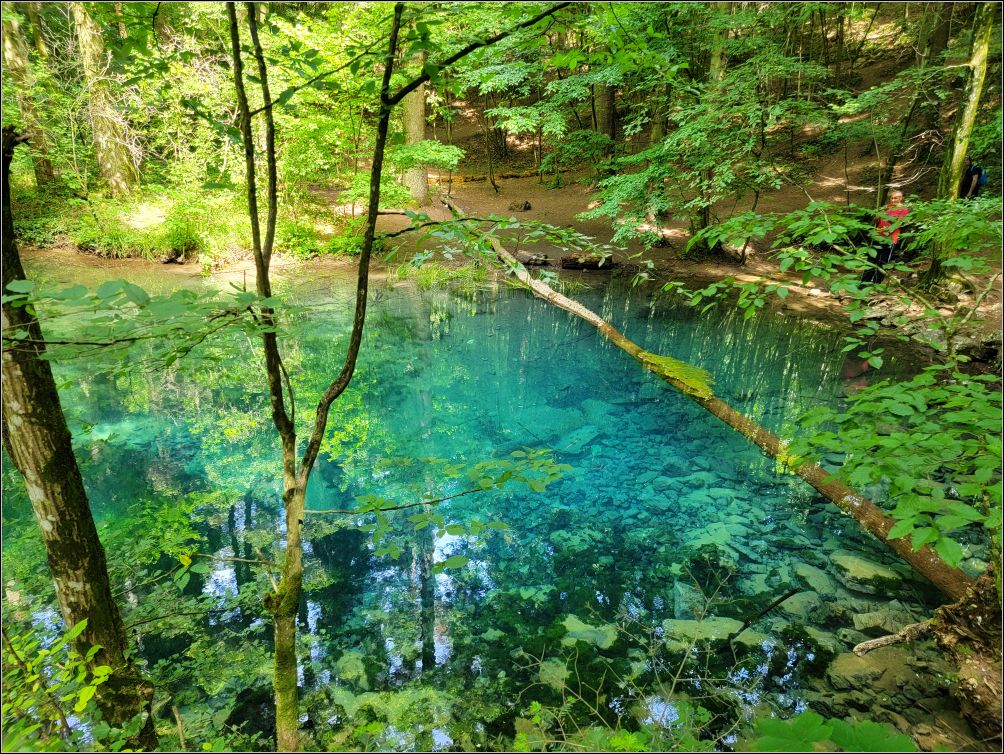
The legend says that, when Banat region was still under Ottoman occupation, a handsome and rich bey with blue eyes was hunting in the Flower Meadow. There, he met a local girl from the village of Potoc, who was guarding her grazing sheep. The young prince’s father did not approve of the love between the two young people, so he sent his servants to kill the girl. Fighting for his love, the young bey lost an eye in the battle. In that place, a small lake appeared, with waters as blue as the bey’s blue eyes: the lake of the Bey’s eye, and his tears turned into the Bey’s Spring.
Definition: Bey = a title given to senior officers and/or high officials of a city or province in the former Ottoman Empire
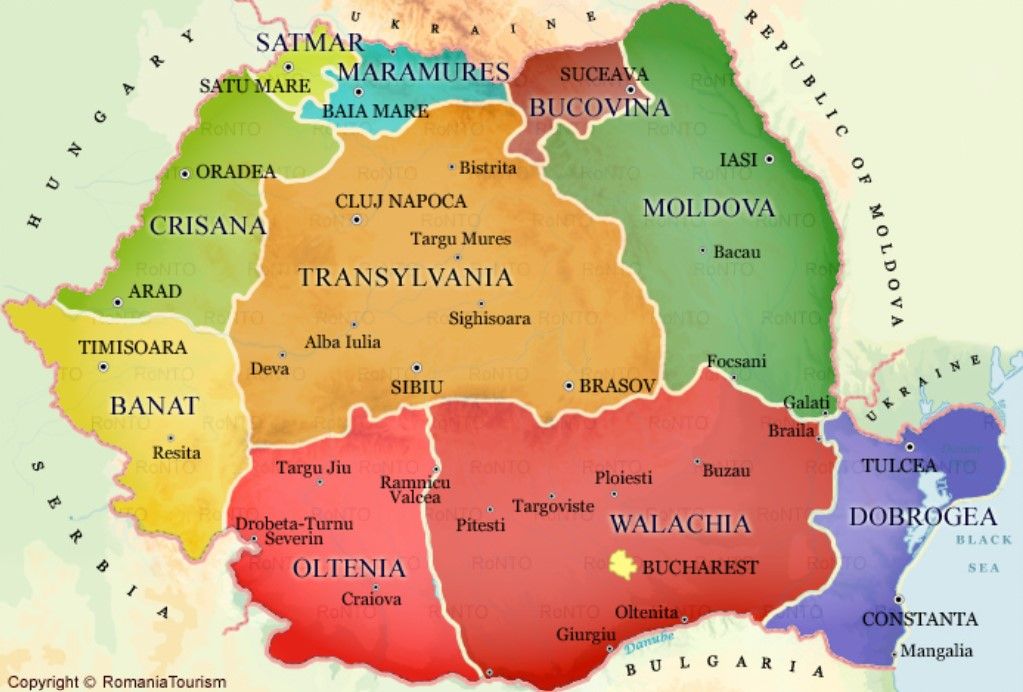
After enjoying the sights of the Danube River, we were ready for our next adventure. A two-hour drive from the Iron Gates took us to the village of Sasca Montana, Romania: a village practically forgotten by the world today, but well known 2,000 years ago as the “Centum putae”, meaning The Region of a Hundred Mines, as mentioned by the Roman historian Tacitus in 120 AD.
It is said that hundreds of kilograms of gold and up to half a million kilograms of silver were captured in the Dacian wars and afterwards. As in any other exploited region, the Romans took advantage of the precious metals in the occupied territories, bringing them back to Rome as boots, treasure and other forms of payment. The Roman games celebrating the Dacian conquest are said to have lasted 123 days, with 10,000 gladiators engaging in fights and 11,000 wild animals being killed during that period.
Read more: Iron Gates, the most spectacular gorge along the Danube River
But we were here to enjoy nature and its wonders. 15 km from Sasca Montana, where we set up base for a few days, we first stopped at the Roman Tunnels, a narrow passage that crosses from one side of the hill to the other. We could have walked this entire section, taking a straighter path, but we preferred to come by car, a quite rough drive as we found once there.
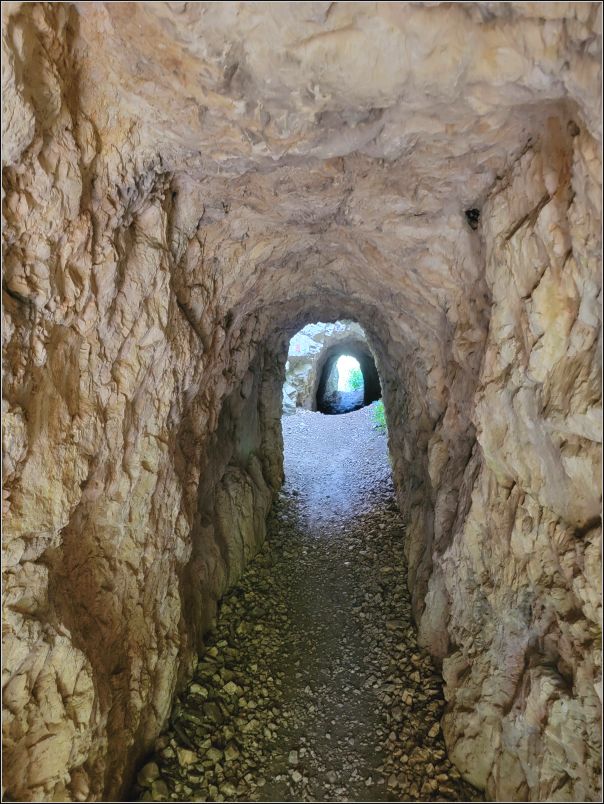
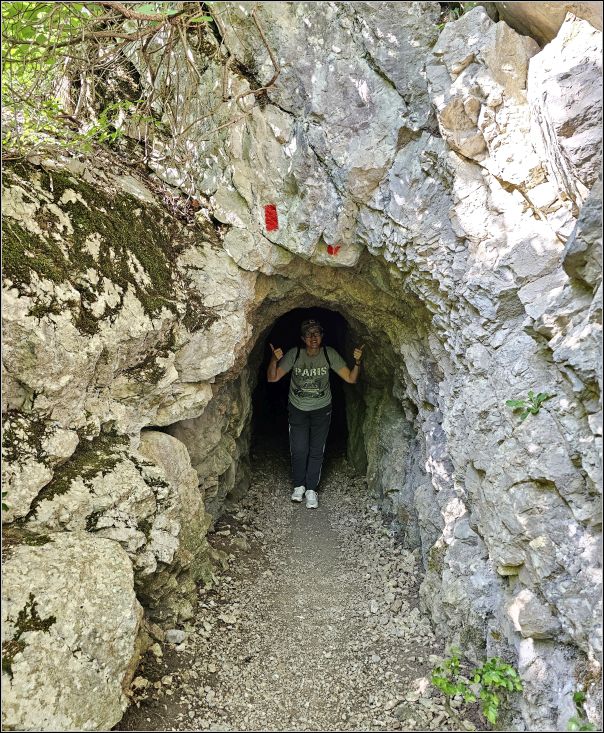
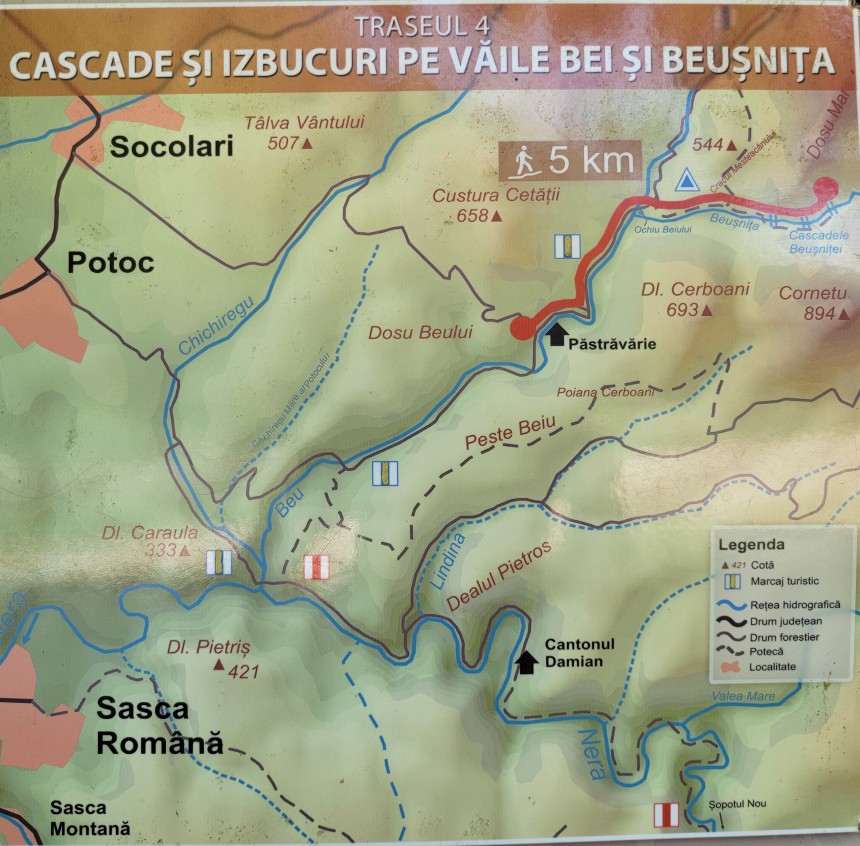
But as slowly as we could, trying to avoid the hundreds of potholes, we managed to get there, and, instead of hiking 2 hours from the Tunnels, we drove all the way to the trailhead, leaving us only 30 minutes to walk to the lake.
Read more: Romania, a land of hidden gems: Bear’s Cave
Located in the southwestern Carpathian Mountains of Romania, called the Banat Region, Nera – Beusnita Gorge is a special protected area, part of the much larger Nera Gorge-Beusnita National Park. The complex landscape, characterized mainly by beech forests, rocky slopes and various types of shrubs, has formed a well-established national park since 1990.
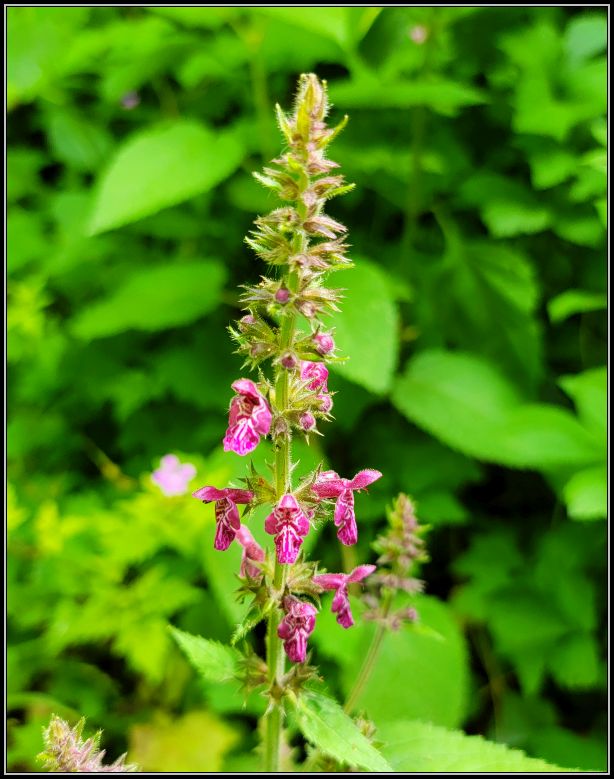
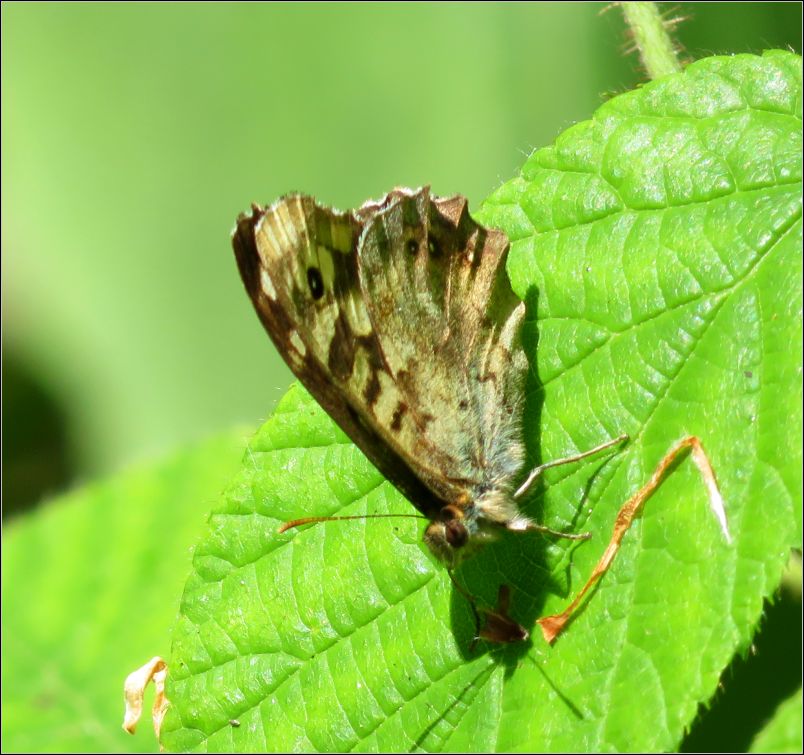
Crossing the park, the Nera River has carved into the Jurassic limestone one of longest gorges in Romania (almost 23 km), which, together with the numerous petrifying springs with travertine formations, forms impressive waterfalls and wonderful natural lakes.
Read more: Freezing in the summer: Scarisoara Cave
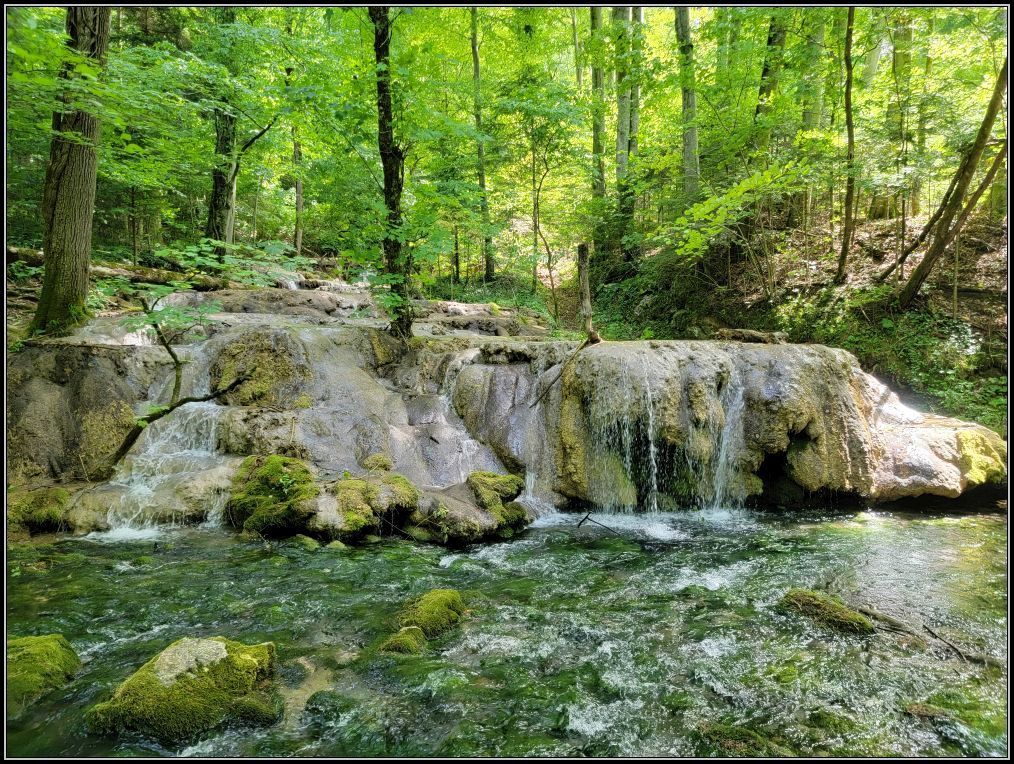
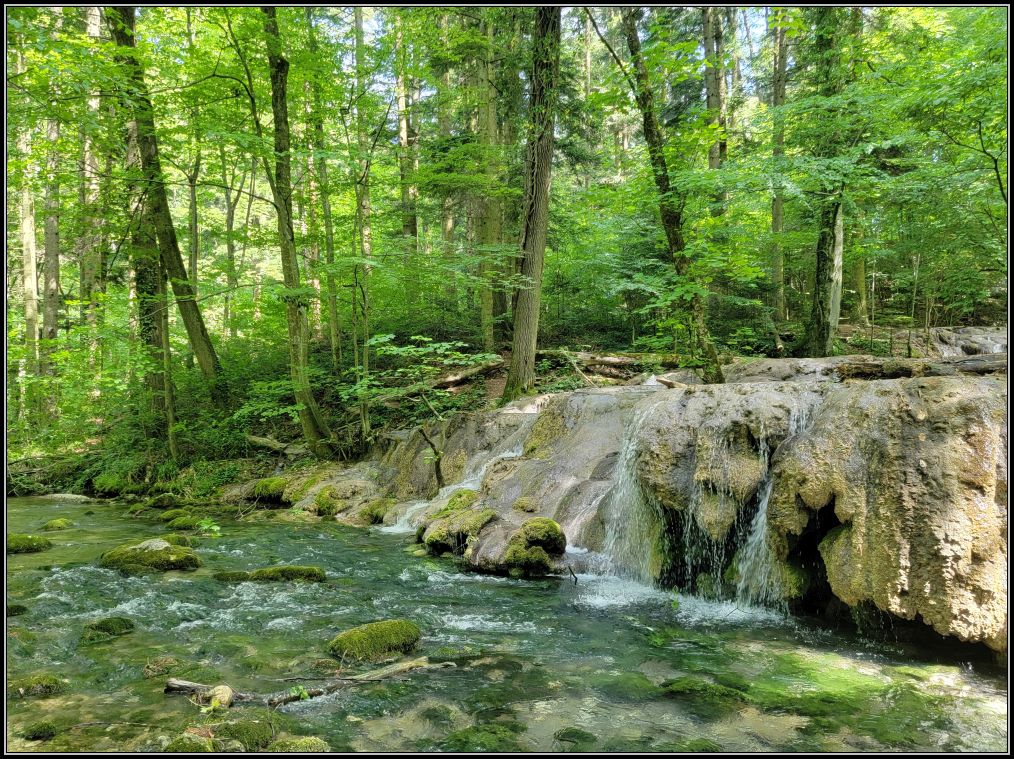
Part of a longer trail to Beușnița Waterfall, one of the most popular destinations is the Lake of the Bey’s eye. The 30-min walk to the Bey’s eye lake starts shortly after the large parking lot. The path follows the Beu stream, where several waterfalls delighted our eyes. This trail is considered a moderately difficult route in general, but because we drove most of it, it was really easy, as the 30-minute walk (one way) to the lake went by very quickly. We visited it in May, when the forest was all green and the elderflowers were in full bloom, making us think we were in heaven. The whispers of the river and the intoxicating scent of the elderflowers created a fairy tale-like atmosphere.
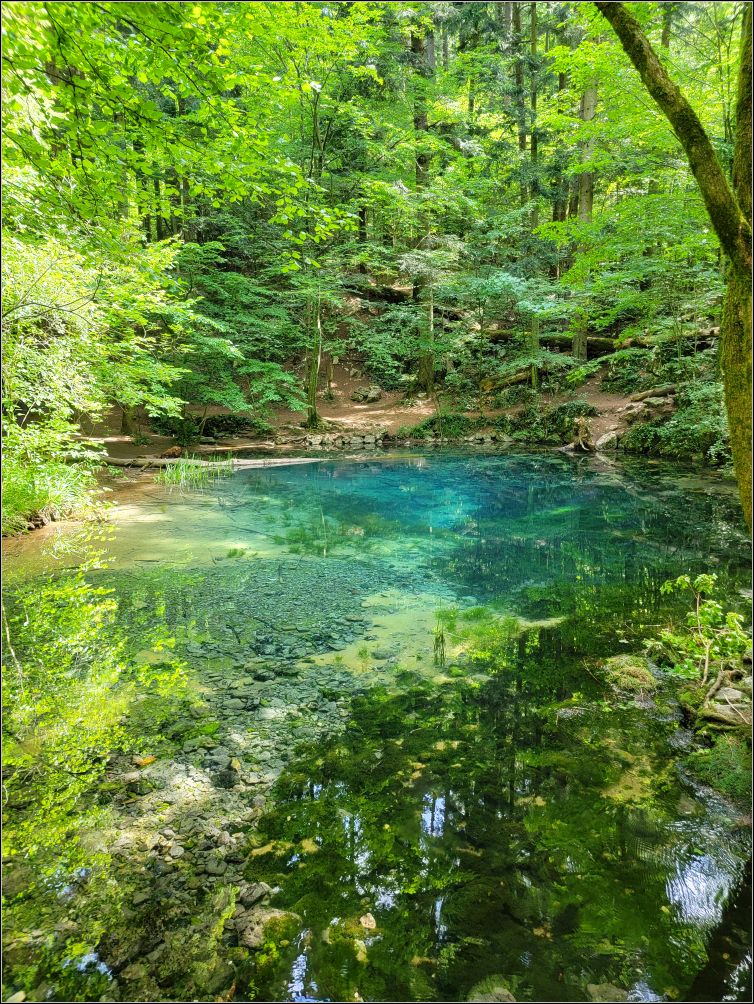
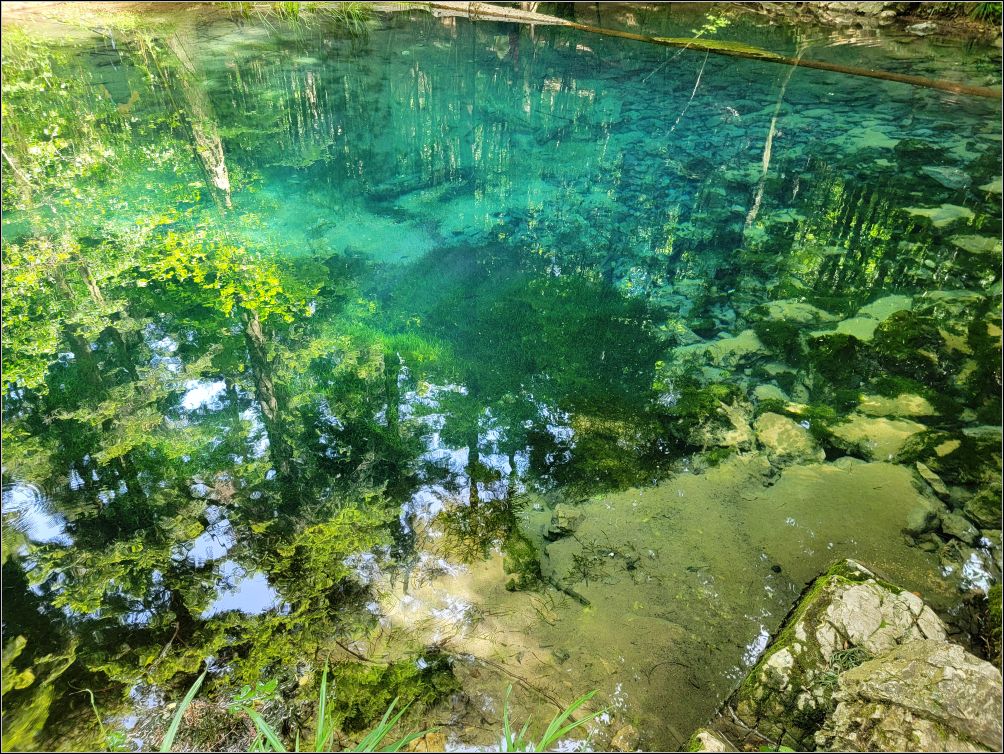
Once we reached the lake, we found the clear blue water and the reflections of the surrounding trees being truly spectacular. The lake is actually a sinkhole with a diameter of 15 m and a depth of up to 3.6 meters. It never freezes due to its own underground karst spring, and the turquoise shades of the water make it really famous.
Tip(s) of the day:
*We preferred to drive all the way to the starting point, although many prefer to hike it from one of the nearby villages. Road 571K took us to the Bey Bridge, where we followed about 2 km of dirt road to the end, where there is a trout farm and a couple establishments; we followed the path from there, it is very well marked with a vertical yellow stripe;
*there was a sign at the bridge about an entrance fee 10 lei (about 3 dollars), but there was no one to ask for the money. I understand that during the summer months, there is someone to collect them, for parking and/or for entrance;
*there is a sign right at the entrance of the trail to keep walking on the marked trail and to be careful of vipers. You might want to wear gaiters;
*since there are several waterfalls along these streams and rivers, the best time to hike this trail is in spring or early-summer, April to June, or after rains.
~visited in May 2024
 1000 Places and Memories
The colour of the water is beautiful. It’s interesting to hear that it never freezes.
LikeLiked by 1 person
Thank you! I hope all is well with you, Linda!
LikeLiked by 1 person
1
LikeLike
We didn’t visit Banat, but the sinkhole-lake is beautiful, and a nice walk to reach it. There is so much history in that area and a great legend to the lake. Maggie
LikeLiked by 1 person
True, when there is so much history, the legends follow, right? Have a wonderful day! xx
LikeLiked by 1 person
Beautiful! I will have to check our hiking route for this summer as we have a trip planned to Romania for about an 8-day hike. Looks like you had a great trip!
LikeLiked by 1 person
How wonderful, Lexie! What is your route if you don’t mind sharing?😊 There is so much to explore in the beautiful mountains of Romania and there is also a fairly new long distance trail Via Transivanica that I would like to try one day🥰
LikeLiked by 1 person
We will be walking village-to-village on the Via Transilvanica and Via Hutulca. I think we start in Bucovina then cross over the Carpathians into a bunch of Saxon and other villages. At some point we summit Hasmasul Mare. I have not studied the route well enough yet, but those are a few waypoints!
LikeLiked by 1 person
It sounds awesome! I hope you’ll have a wonderful time there! xx
LikeLike
You captured so many beautiful photos. I love the lake’s intense, turquoise-blue colour and how the whole area is so lush, with clean rivers turning into waterfalls here and there…just perfect for a refreshing escape. I’ve always desired to explore Romania, even more so now. Thanks for sharing, and have a good day 🙂 Aiva xx
LikeLiked by 2 people
Thank you Aiva! We loved the park, quite few waterfalls along the way and the pristine forest was all that we needed those day🥰
Have a lovely day! xx
LikeLike
Incredible shades of blue/green, Christie xx
LikeLiked by 1 person
Thank you, Jo! We always feel a special joy when we are in the woods. The lakes and waterfalls along the way were just a bonus🥰
LikeLiked by 1 person
Love the beautiful reflections, Christie. We took a river trip down the Danube last year.
LikeLiked by 1 person
Right, I remember! A wonderful way to see the riverside cities.
Have a great day, Curt!
LikeLike
Yes, I did blog about it, huh. I never finished the series, however. Other things called. We had just made it to the Iron Gates…
LikeLiked by 1 person
This is such a beautiful hike around a beautiful lake. Though you didn’t hike the 2 hours all the way there, the drive got you there faster to the lake! And to prep you for the moderately difficult route 😄 It seems like a fairy-like atmosphere like you said – the greenery stunning and the lake itself reflecting different shades of colour and the turquoise stunning. I’ve never heard much about visiting Romania and this was a lovely introduction for me 🙂
LikeLiked by 1 person
Thank you for stopping by, Mabel! I still have a couple of posts coming up about our last visit there ~ Romania is a beautiful country😊
LikeLiked by 1 person
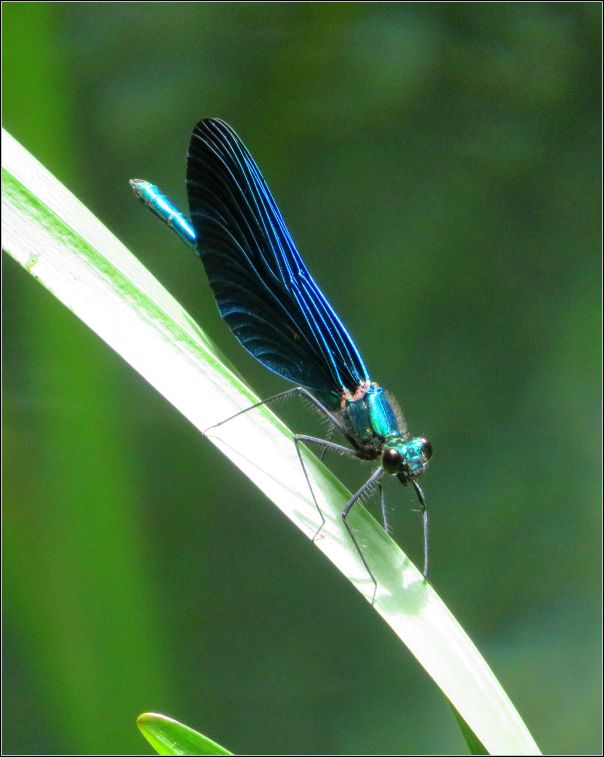
I always enjoy reading about legends – like the one here about The Lake of the Bey’s eye. And as beautiful as the colour of the water is, so beautiful is your photo of the blue insect (is it some sort of butterfly)?
LikeLiked by 1 person
That is a blue dasher/dragonfly. I’ve seen it many times here in Canada and I was so surprised to see it in Europe too.
LikeLiked by 1 person