
His heart continued to beat strongly long after nightfall. As darkness fell, an eerie silence enveloped the entire train, and only the jerky rhythm of the wheels on the tracks could be heard.
He raised his eyes to the sky and saw the gates of a new universe opening. As a child he had run away countless times, but this time his run was no longer a run from the past, but a run to the future, towards a new, rediscovered self, almost like the suffering of a new enduring and overwhelming passion, as he sometimes liked to accept.
Born on February 19, 1876, in Hobița, Gorj, Romania, Constantin Brâncuși, the sixth child of a large family, did not have a particularly great childhood. He ran away from home twice: the first time at the age of 11, second time a few months later, further away, where he worked as a helper in various restaurants.
His talent was noticed during one of these escapes, and with the financial support of some benefactors, he graduated from the School of Arts and Crafts in Craiova and later the School of Fine Arts in Bucharest, receiving a teaching position. But teaching was not for him, and, running away once more, he returned to Hobiţa, his native village.
Not long after, he heard the call of Paris: La Belle Époque, with its nightclubs, artistic communities and a joie de vivre ideology that was the epicentre of the era, and he decided to flee once more. At the age of 27, in 1903, he set off for Paris, but stopped in Budapest, Vienna and Munich where he stayed for a while. When he ran out of money, he sold the cloths from his backpack and the watch on his wrist. Surprised by a torrential rain, Brâncuși contracted pneumonia, being hospitalized for several months in a nuns’ hospital. It is said that he walked most of the route, traipsing around many European cities. He was fleeing again, but this time a slow journey, as if a hesitant flight.
He walked in summer, autumn, winter, spring, treading through landscapes far from the beaten path, experiencing sights, living adventures, enduring hardships, seeing, touching and feeling the world in a unique way, as if preparing for what was to come. He arrived after more than a year of pilgrimage, on July 14, 1904, in Paris. In the midst of celebration, Paris welcomed him with parades and fireworks. He was 28 years old and he ready to greet the world. And the world greeted him.
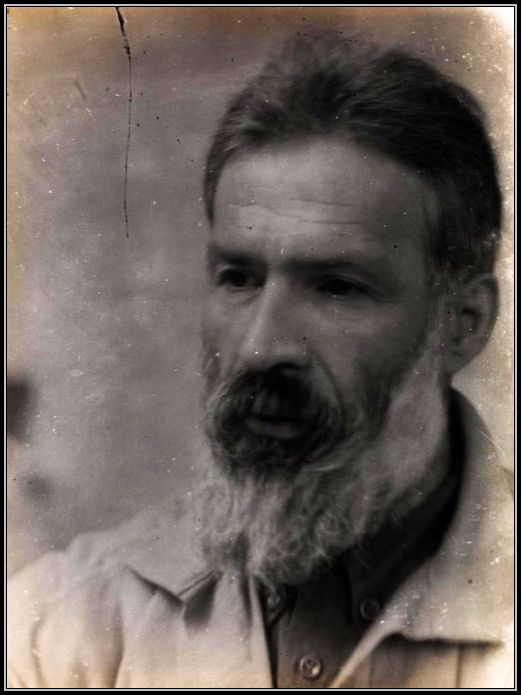
After a few months of apprenticeship in the studio of the renowned sculptor Auguste Rodin, he left, dissatisfied with his own style, convinced that “nothing can grow under big trees”. Shortly afterwards, Brâncuși began creating works that reflected his own artistic philosophy, focusing on the essence of forms and simplicity. This was the beginning of his own style, characterized by abstraction and the reduction of form to the essential: rounded shapes became his mantra, balance and verticality his leitmotif.
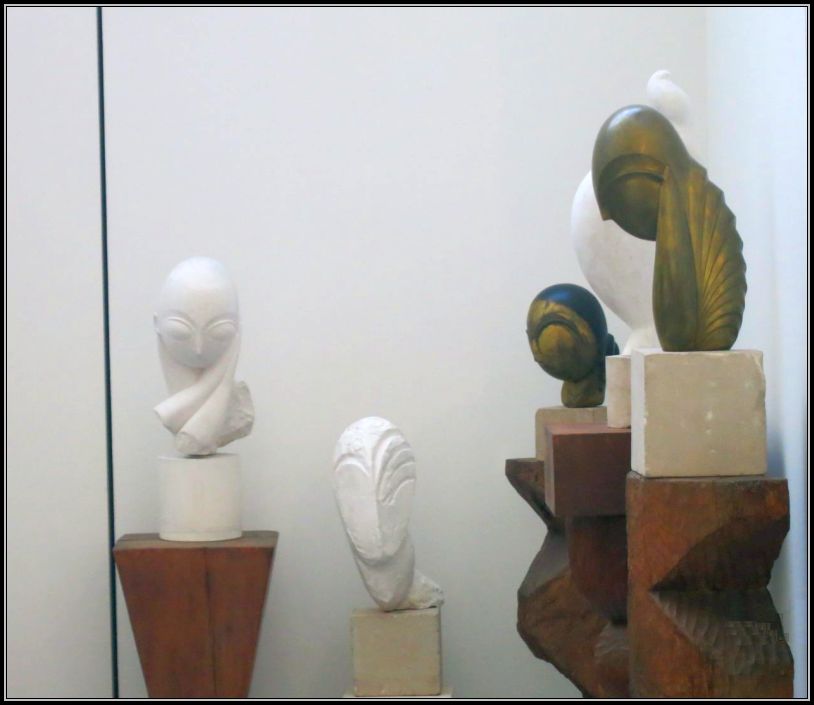
From 1914 he began to hold personal exhibitions in New York, and the American market quickly propelled him in his rise as an artist. The exhibitions followed their course, and fame preceded. The boundaries of traditionalism had long been surpassed, and themes such as love, nature and spirituality, visualized in their own, unique, almost unreal way, were in full swing. With undulating shapes and gentle curves, Constantin Brâncuși found new forms of dance within own restrains. Listening to the stone, the air and the wood, he made the stone sing and featherless birds fly to immortality. He becomes the father of abstract art, but without being abstract at all, a pioneer of contemporary sculpture.
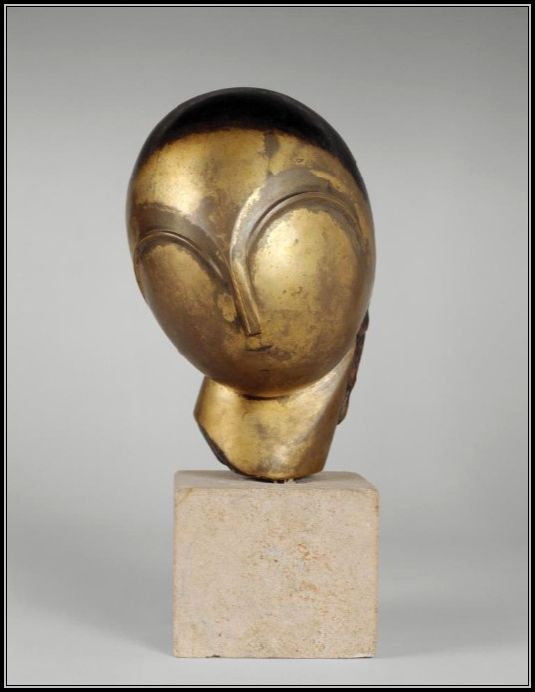
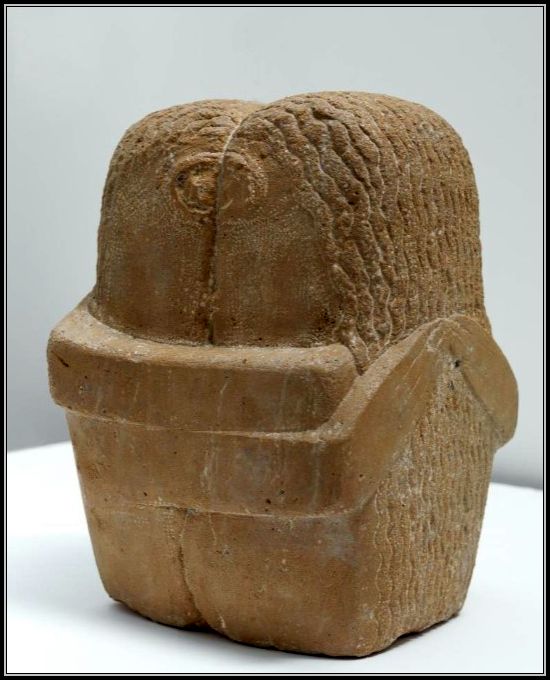
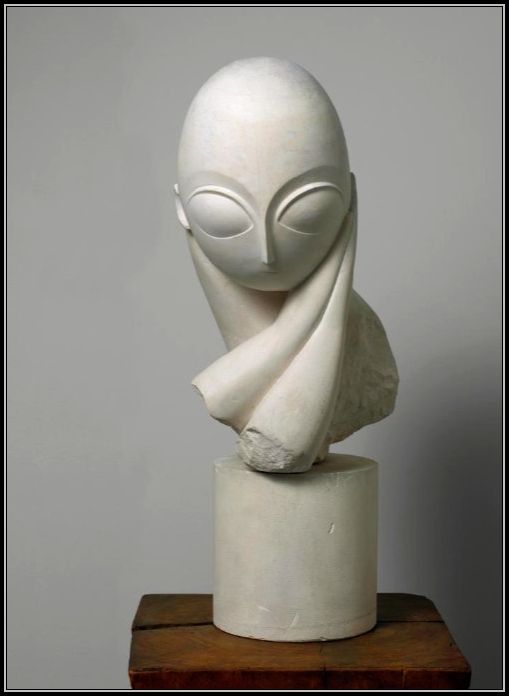
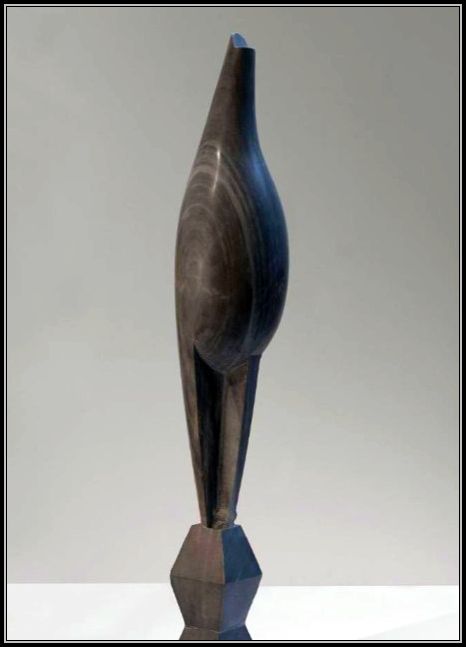
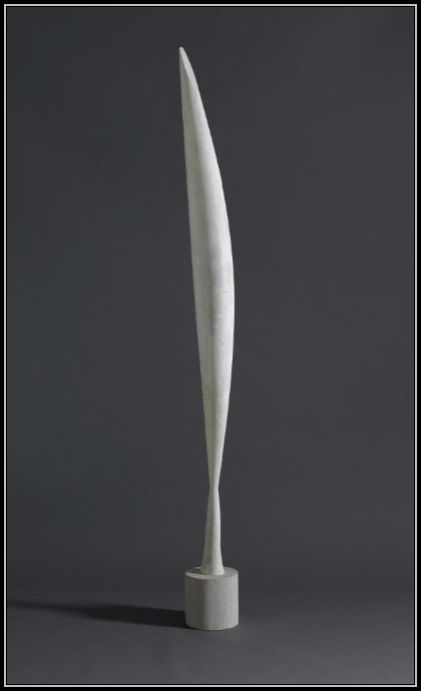
Photo credit for close-ups: Constantin Brâncuși artwork page from Centre Pompidou website.
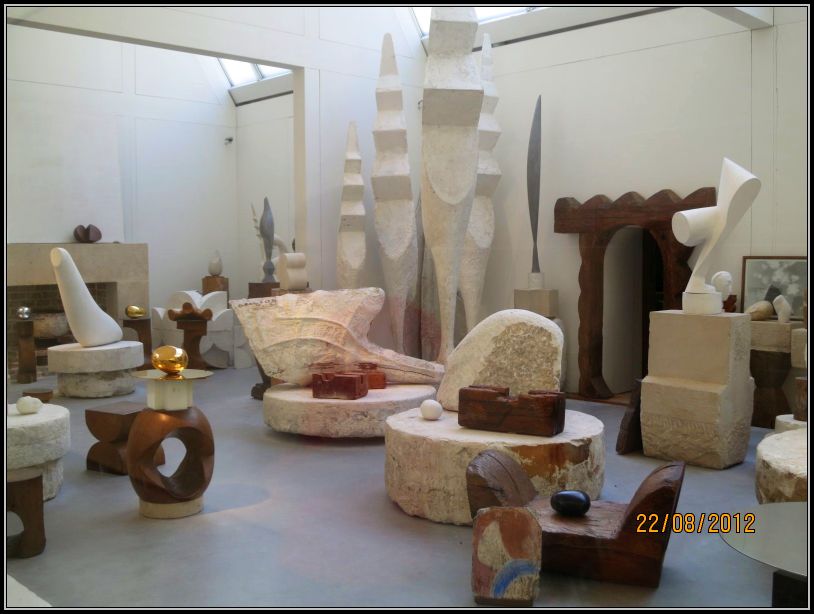
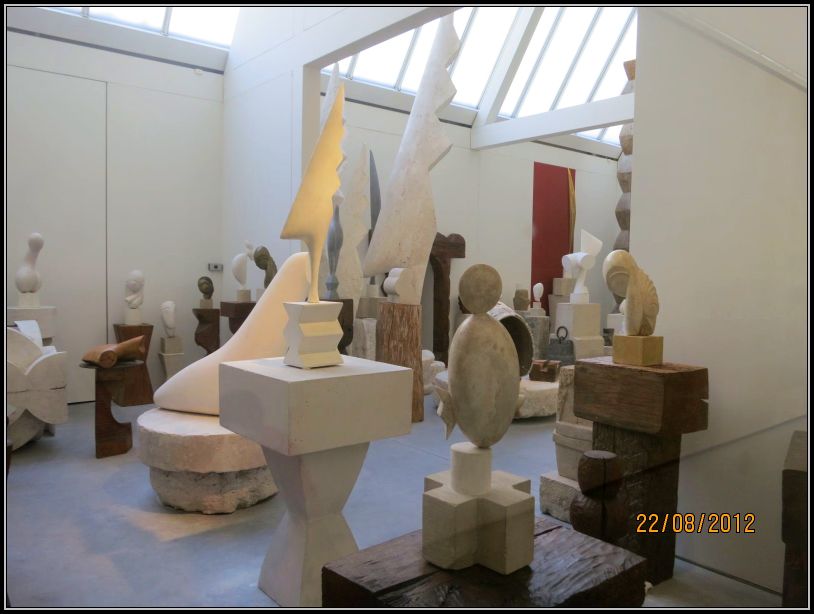
From 1916 until his death in 1957, Brâncuși worked in various studios in the 15th arrondissement of Paris. He considered of crucial importance the entire relationship between his sculptures and the space they occupied, including the pedestals themselves.
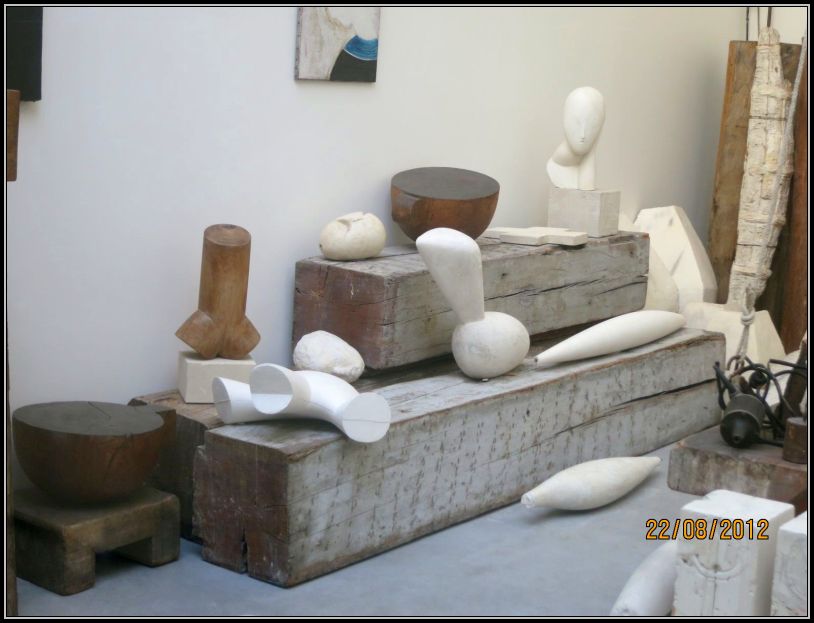
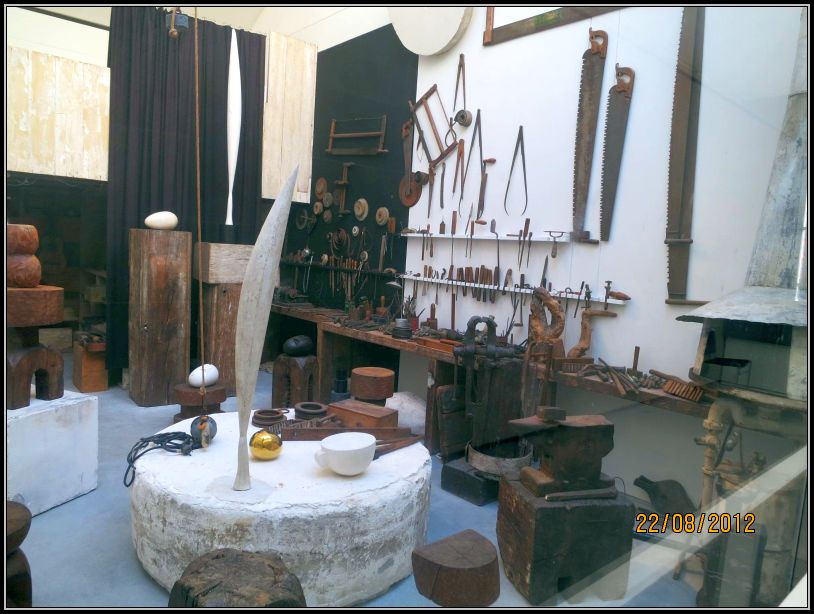
He called his works “mobile groups”, emphasizing the importance of the connections between the works themselves and the possibility of each for moving within the group. An exhibit space for his work, and a work of art in itself, this proximity became so fundamental that the artist no longer wanted to exhibit elsewhere, and when he sold a work, he would replace it with a plaster copy so as not to destroy the unity of the mobile group.
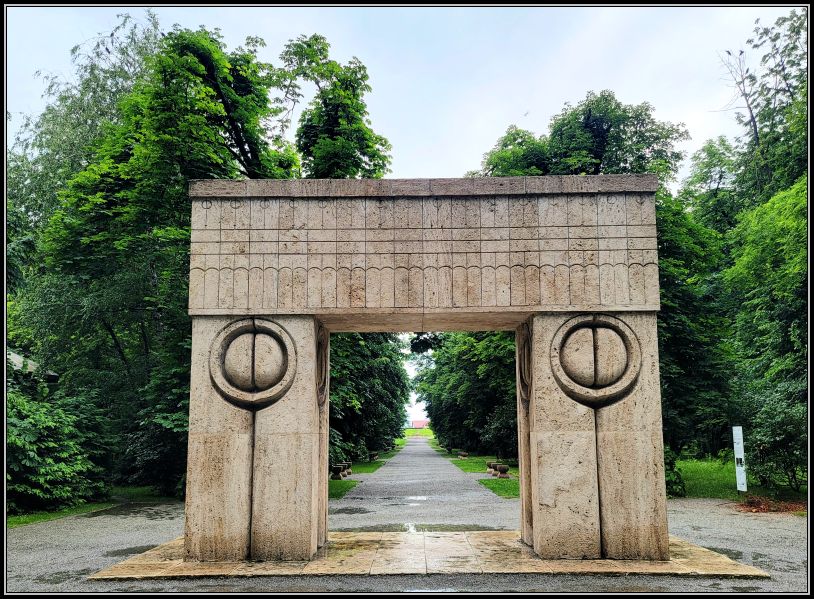
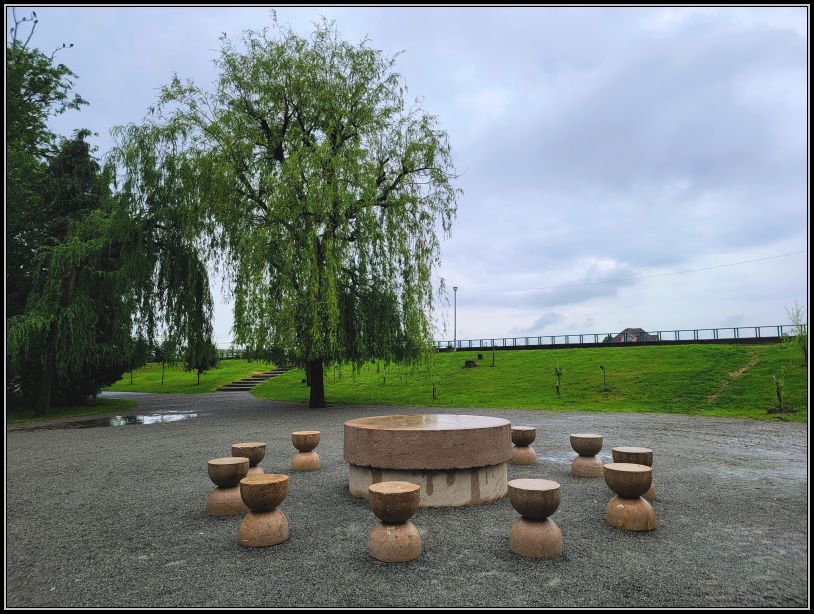
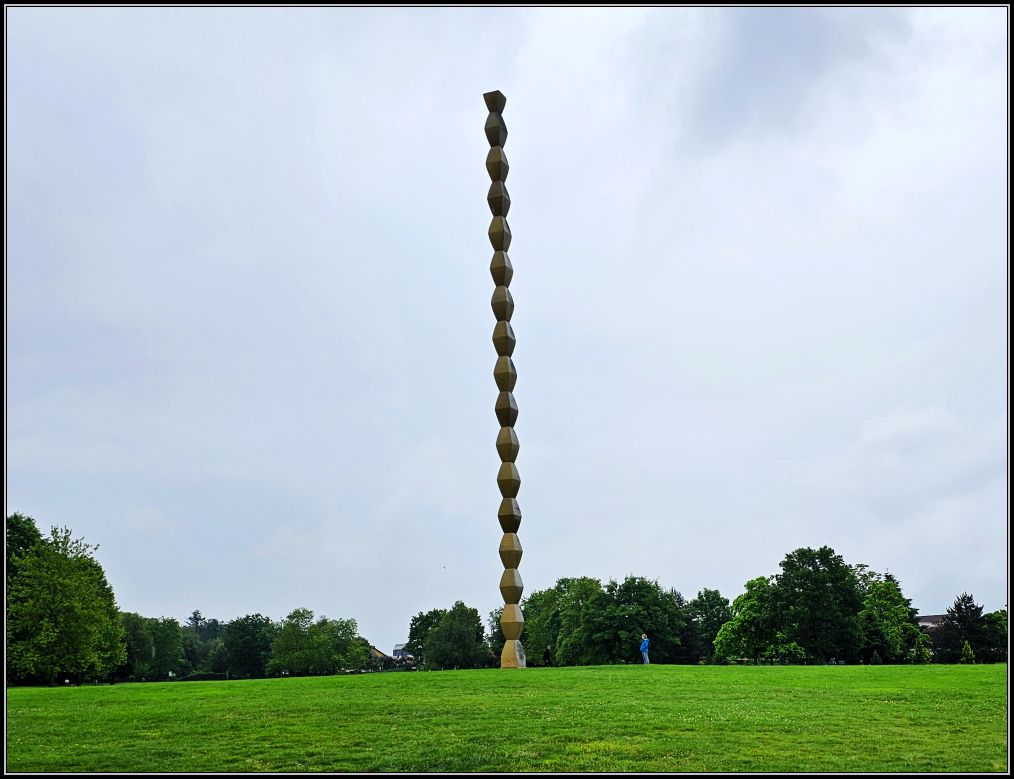
In Romania, Brâncuși is also known for the monumental ensemble “Avenue of the Heroes” created between 1935 and 1938, to glorify the memory of the Gorj heroes who fought and sacrificed themselves during the great war of 1916 – 1918. The monument, famous for its main three pieces: Table of Silence, The Gate of the Kiss, and The Endless Column, is located in the Public Garden of the city Târgu Jiu, and since 2024 the ensemble has been part of the UNESCO World Heritage Site.
Constantin Brâncuși quotes:
“Simplicity is the essential part of complicated things “
“I didn’t want to sculpt the bird; I wanted to sculpt the flight”
“Things aren’t difficult to do. It’s hard to get yourself in the mood to do them.”
“All dilemmas are solved by unifying the opposites.”
“Nothing can grow under the big trees”
“People no longer realize the joy of living, because they no longer know how to look at the wonders of nature”
‘“When you stopped being a child, you died long ago”
“We can never reach God, but the courage to journey towards him remains important”
Tip(s) of the day:
*For information on visiting the studio, read about the renovation updates here, as the entire Centre Pompidou is undergoing a major transformation starting late 2025;
*We visited Brâncuși Pavilion in Paris in 2012, and the Avenue of Heroes in Romania in 2024.
 1000 Places and Memories