
Home to some of the oldest settlements and picturesque scenery on the island of Newfoundland, Bonavista Peninsula is the perfect place to explore the beautiful Newfoundland’s countryside. The road going around the peninsula is called Discovery Trail, and has access to some of the most famous landmarks and places of interest.
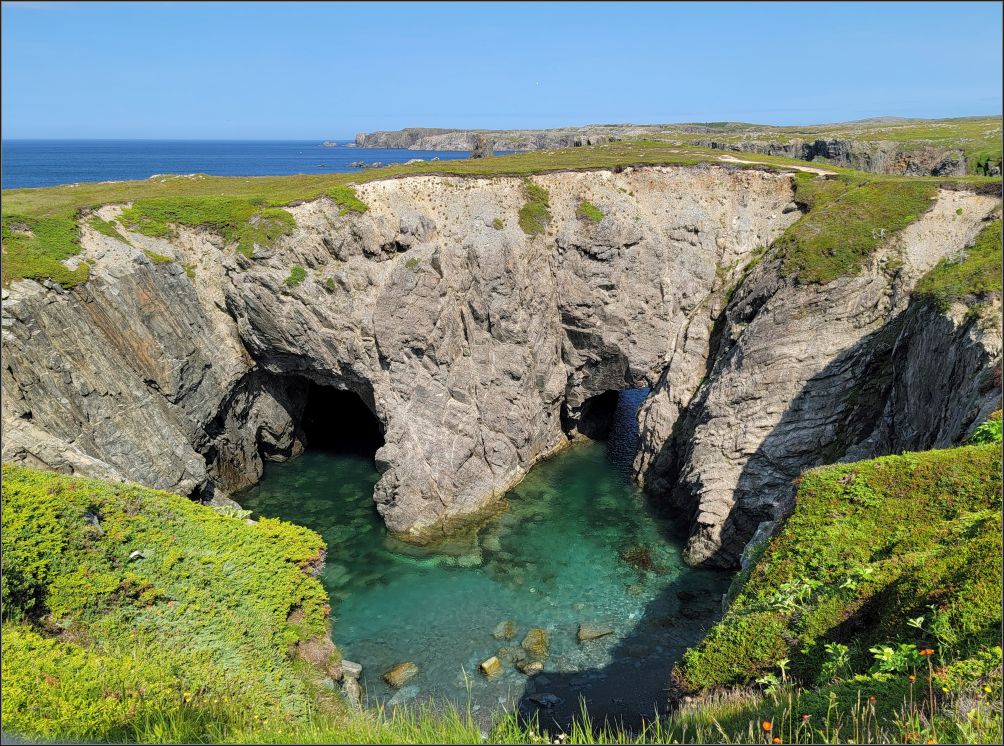
Newfoundland and Labrador form together the easternmost province of Canada. While Labrador is connected to mainland Canada, Newfoundland is an island in the Atlantic Ocean, separated by the Strait of Belle Island.
Colliding tectonic plates shaped much of the geology of Newfoundland, and the rocks on the Island of Newfoundland are divided into three zones: Western, Central and Eastern. While the western area has been part of North America for the last billion years, the Central and Eastern part are relatively new, if you can say about 200 million years ago. The old continents broke apart to form the present Atlantic Ocean, leaving rugged shores to be swept by the wind, water, and time.

With a length of approximatively 425 km, Discovery Trail is essentially the road that circles around the Bonavista Peninsula, with three road entrances: Routes 230 and 230A in Clarenville, and Route 233 in Port Brandford.
After passing Clarenville and Shoal Harbour, we found ourselves driving up north on Route 230. The road goes on and on, and our curiosity picked up with every km, to find out what the Discovery Trail is all about. The hilly landscape and the verdant landscape accompanying us stretched over as far as we could see. But we kept driving, heading straight to the head of this peninsula, where the town of Bonavista is.
Here is what we found to be the most interesting things along the Discovery Trail:
Bonavista
In early May 1497, John Cabot (Giovanni Caboto), a Venetian citizen bearing letters from Henry VII, sailed from Bristol to seek western passage to Asia. On June 24, he made land somewhere on the East coast of Canada. Although there is no certain evidence of the site, the local tradition records Cape Bonavista as the landfall, and the place where John Cabot said (when he first laid eyes on the beautiful peninsula): “O Buona Vista” meaning Oh, such a beautiful sight.

Cape Bonavista lighthouse
Built in 1843, the Cape Bonavista lighthouse is worth a quick peek inside. Very important for generations of sailors and fishermen, the lighthouse beam was the only connection to land while out in dark seas. We were able to see the light going around, from 30 km away, from Melrose, where we had our base for 3 nights in this area.
It is said this place is one of the most photographed places in NL. No wonder why, we saw so many puffins on the sea stack across the lighthouse, and few whales in the distance going around Green Island.
Read more: Why Newfoundland was nicknamed the seabird capital of North America
King’s Cove and lighthouse trail
Local legend has it that King’s Cove is actually where Cabot and his party originally landed, and where the cove got its name from, as he erected the king’s banner here.
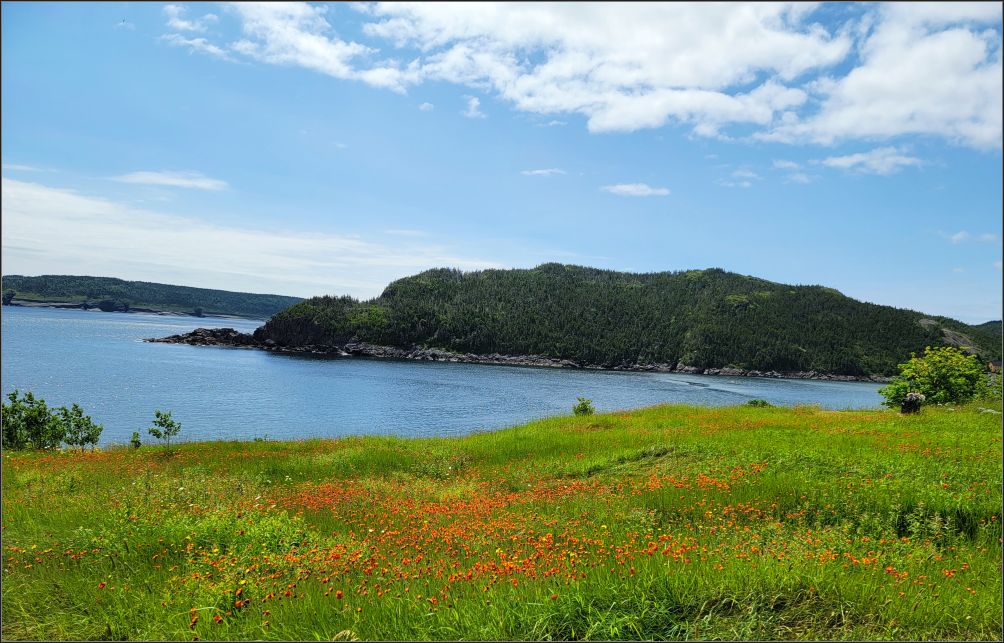
We parked in front of St. Peter and Paul church, and headed to the King’s Cove lighthouse, located down the path to the head of the peninsula. The walk is easy and pleasant, passing by Pat Murphy’s meadow, a lovely patch of wild flowers overlooking the cove. The lighthouse was closed, and stood graciously on top of the imposing rocky shore. We continued the path to the Fish Point lookout, wanting to go around the Outer loop, but after that the rest of the loop and the remainder of the trail became overgrown and it didn’t appear to be used or marked in any way, so we turned around using the little side trail till we reached the main path.
Tickle Cove Sea Arch
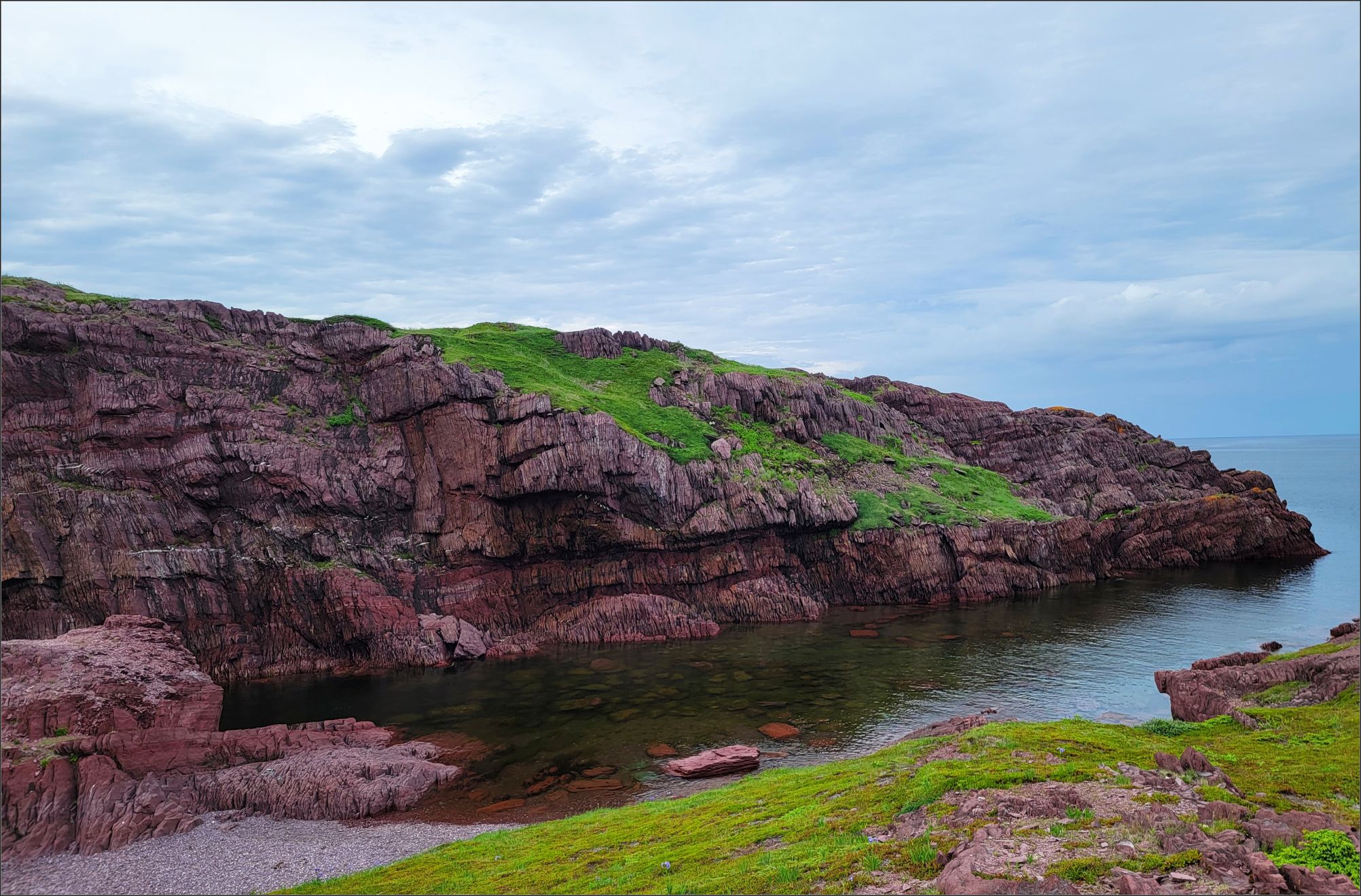
Not far from the King’s cove, there is Tickle cove. We left Route 235 and took a side road through a couple of villages with several houses scattered across the way. Red rocky outcrops made for an interesting landscape all the way to the end of the road. A short walk between some large granite boulders took us from the parking lot to the Sea Arch. These erratics were actually transported by glaciers million of years ago, from the other side of Bonavista Bay. A legend tells how these large glacial boulders were used by a giant as skipping stones, who tossed them across Bonavista Bay.

The Tickle Cove Sea Arch and rocky ridge provide a unique scenery. The sedimentary rocks, red sandstone, siltstone, and other conglomerates make an interesting coastal feature, while the clear blue green water made the rocks much more attractive. After a few sets of stairs and the viewing platform, we continued to climb the rocks around a bit, but didn’t want to venture too far.
Dungeon Provincial Park
If Bonavista sits on a flat terrain, instead, the coastline that surrounds the cape and the Eastern part of this peninsula has a rugged appearance, with cliffs varying in height and look, which is why it has so many natural scenic attractions. Dungeon Provincial Park is just six-minute drive from Bonavista, and offers fantastic views of a collapsed sea cave with natural arches carved by the sea.

The Dungeon had its origin as a cavern with two separate openings to the sea. Thousands of years of continuous coastal erosion led to the widening of the cavern until eventually had the roof collapsed. These collapsed sea caves are known as gloups.
Elliston
The small town of Elliston is located just 10 minutes from Bonavista, and is known to be the Root Cellar Capital of the World, with more than 130 such underground structures. These root cellars are traditional food storage structures, that were built into hillsides and banks, and were used to keep root vegetables cool in the summer, and frost-free in the winter. Half of them are still in working condition and the oldest is 165 years old.

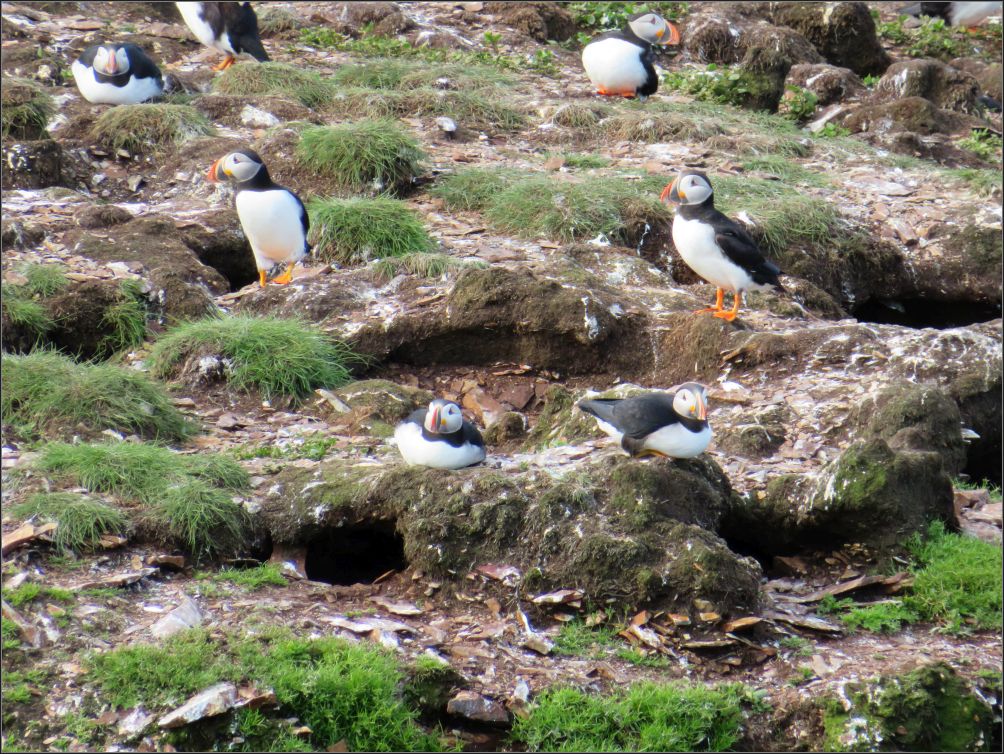
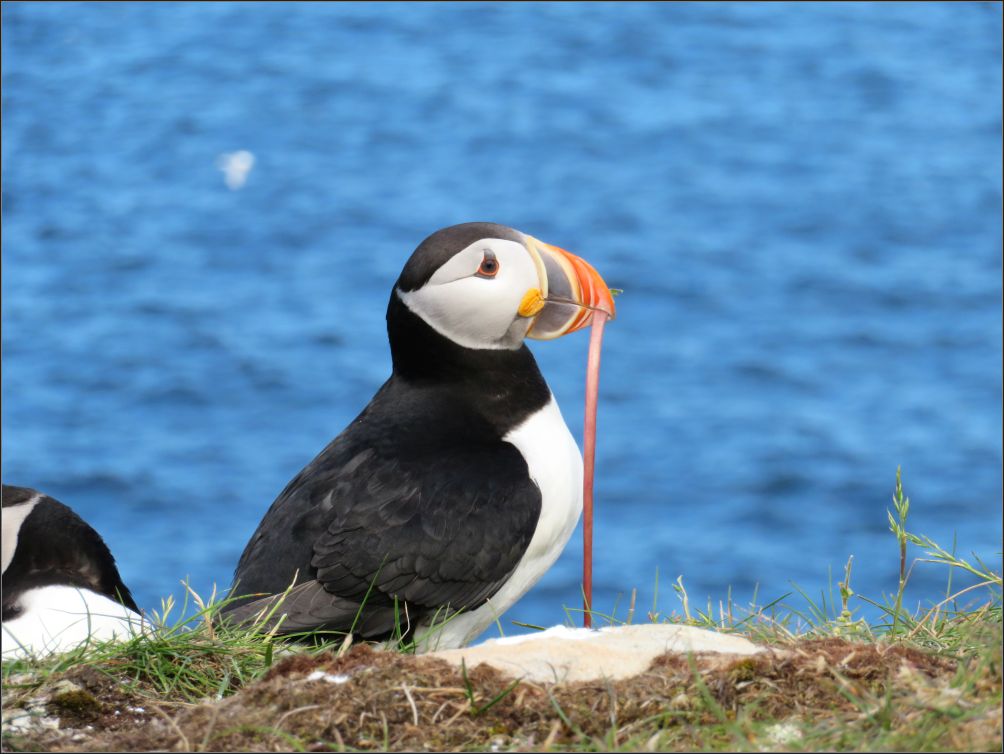
But we weren’t there for the cellars actually. Elliston is home to the best viewing site of the cute and colourful puffins in all Newfoundland. Nicknamed ‘sea parrots’ or ‘sea clowns’ for their appearance, the Atlantic puffins are some of the most loved seabirds.
Read more: The Atlantic puffin
Trinity
One of the oldest communities in North America, the small town of Trinity lies at the edge of Bonavista Peninsula. The rugged shore and colourful houses caught our attention right before entering the town.
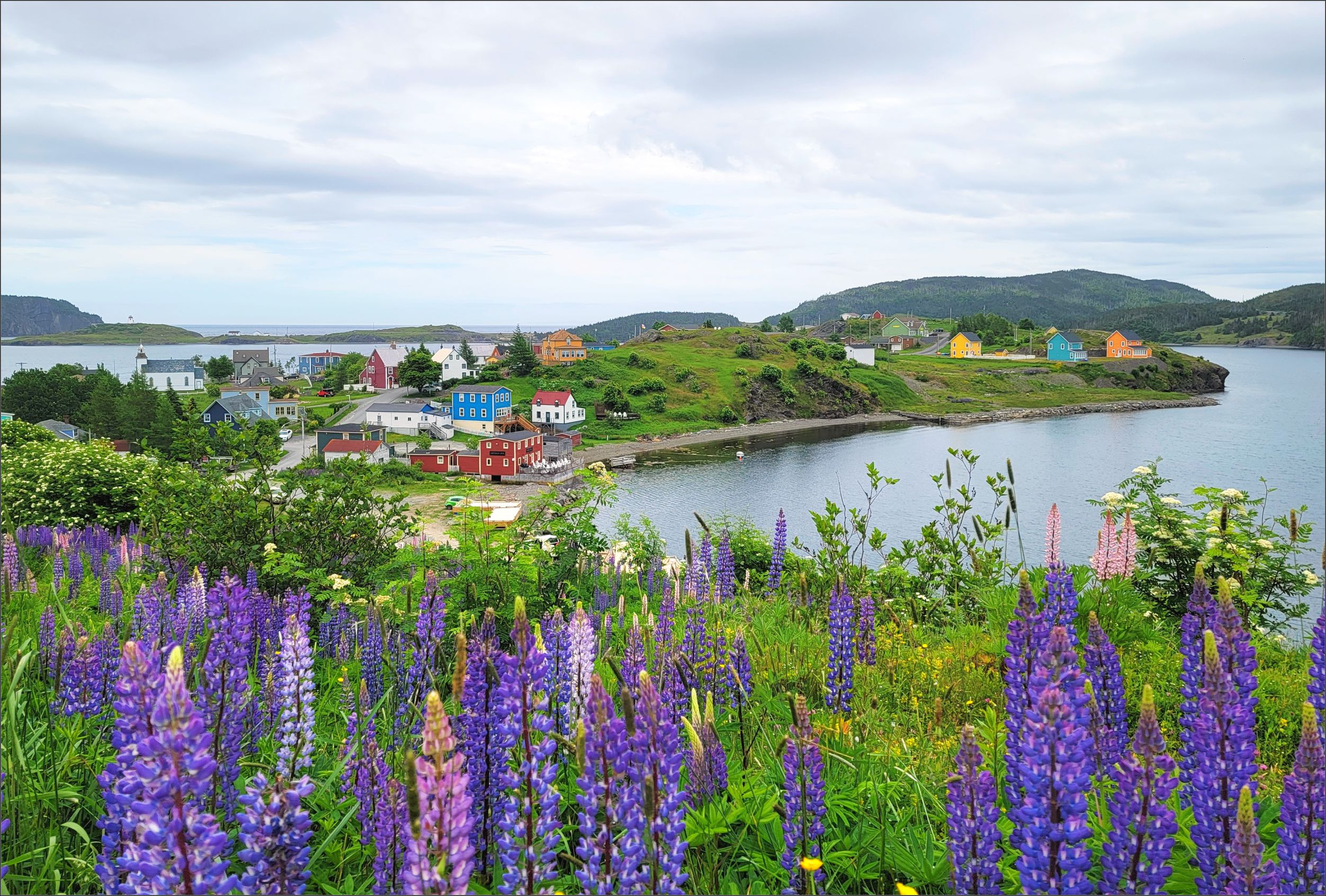
A walk through the town is a walk through history, and everything here tells a story. The geographical location of Trinity made a perfect harbour since the 16th century, where fishermen used Trinity as a summer station in the early days. By the 18th century, Trinity became a well-developed community, a major centre of trade on the northeast coast of Newfoundland.

Fort Point
Known as Admiral Point as well, Fort Point is a long, narrow peninsula at the entrance of Trinity Harbour, which protects the town and the harbour from harsh North Atlantic Ocean. The perfect setting also made it the ideal location for a fort to defend Trinity and a light station to assist the sailors.

Skerwink Trail
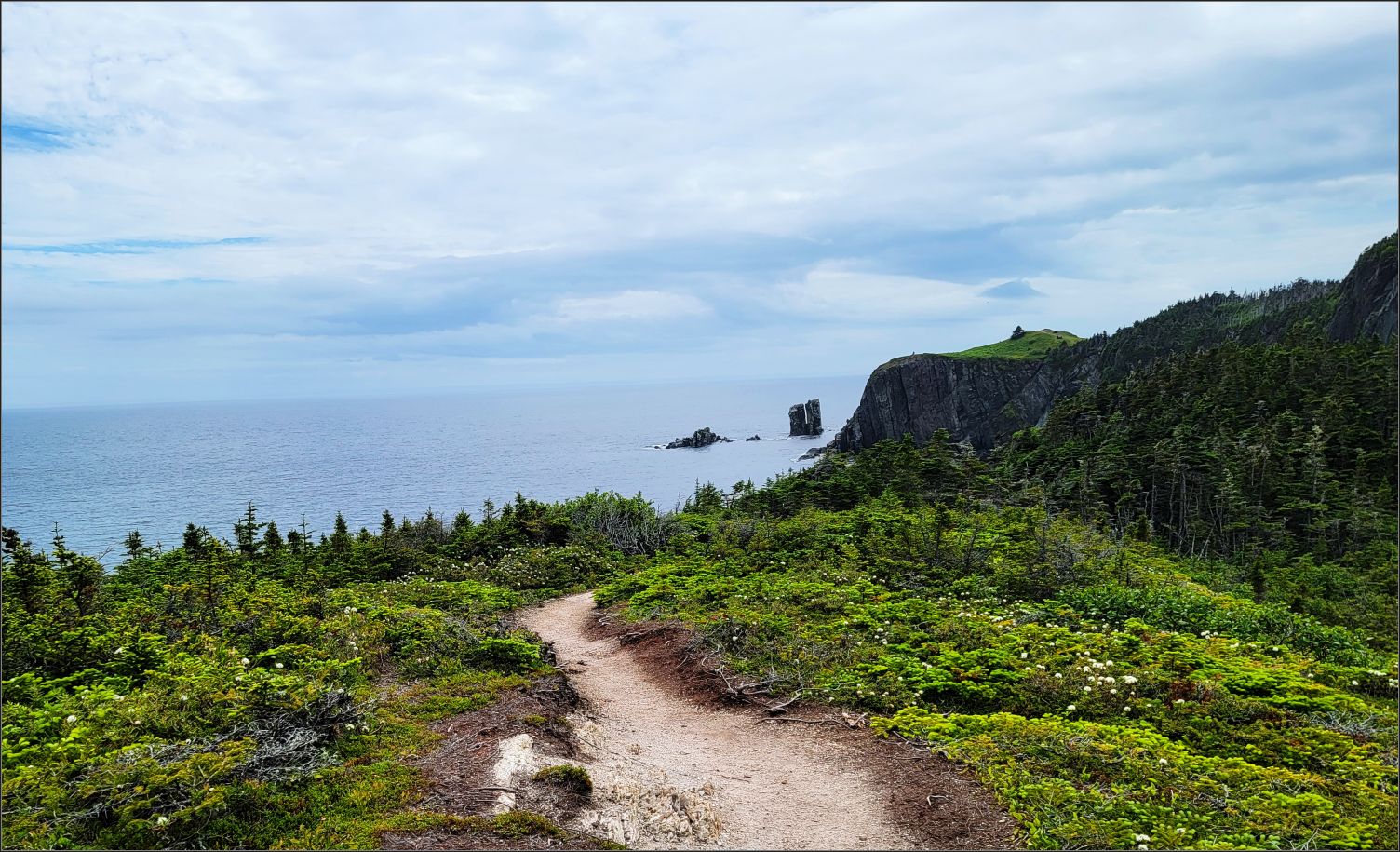
Part of the Hike Discovery network, this 5.3 km moderate loop trail offers all the coastal features you could want. Named after a local seabird, this trail leaves from Trinity East, and takes less than 2 hours to complete. The trail starts through a pine forest, then follows the coastline. Mixed with alpine vegetation, wild flowers and towering cliffs, the rugged coastline is a pleasant surprise, including the sea stacks and all the geological features.
Read more: 10+ reasons why you should visit Newfoundland at least once in your lifetime

Tip(s) of the day:
- It is advisable to rent a car well in advance (if you are not coming with one);
- Be prepared to find a lot of potholes, especially in remote areas;
- The most popular time to visit NL are the summer months: July and August. However, spring and fall can also be good times to visit. Spring is famous as you have a chance of seeing icebergs, while summer is a great chance of seeing whales. Fall is great to see fall colours, especially on the western coast;
- Weather wise, as unpredictable as it can be, be prepared for RDF: rain-drizzle-fog. And clouds, and wind.
~visited in July 2023
 1000 Places and Memories
Thanks for those wonderful tips. Maybe I can make it up there at some time.
LikeLiked by 1 person
Hope you can get there someday, so many pristine lands. Have a wonderful afternoon🙂
LikeLiked by 1 person
Magnificent terrain. Thanks for the tour.
LikeLiked by 1 person
Welcome🙂
LikeLiked by 1 person
It looks like you were fairly lucky with the weather. The coastline is beautiful, isn’t it, but I gather it can be bleak in winter. Trinity looks lovely. Looking forward to the puffins.
LikeLiked by 2 people
Summer can be really beautiful in NL, especially when it’s sunny. All Bonavista peninsula was lovely🙂
Thank you, Jo!
LikeLiked by 1 person
Enjoyable post. Trinity is beautiful.
LikeLiked by 2 people
Trinity was very picturesque, with so many colourful houses!
LikeLiked by 1 person
Great views and wonderful captures!!
LikeLiked by 1 person
Thank you!
LikeLiked by 1 person
Oh how I love Newfoundland and Bonavista is probably the nicest part, other than St. John’s of course. Great post Christie! Maggie
LikeLiked by 1 person
Thank you Maggie! Hope your trip goes well🙂
LikeLiked by 1 person
Thanks!
LikeLiked by 1 person
Stunning landscape shots, and i just love the puffins!!!
LikeLiked by 1 person
Aren’t they such lovely creatures?🙂
LikeLiked by 1 person
😍
LikeLiked by 1 person
Thanks for showing me that we need to get back to the Rock for another visit Christie. It is indeed a magical land. Happy Friday. Allan
LikeLiked by 1 person
We still have to visit the western coast, we shall return some day as well!
Happy Friday to you too!
LikeLiked by 1 person
This sounds like a fabulous location for a road trip, so much to see. Trinity looks absolutely adorable, as of course do the puffins. I’ve seen puffins but never close enough to get photos like yours. A road trip write up that just makes me wanna do it.
LikeLiked by 1 person
A paradise for the outdoorsy and birdwatchers too. I didn’t expect to be able to see puffins so close, the viewing site in Elliston was a real gem.
Maybe you can get there some day.
LikeLiked by 1 person
Wow, I love the puffins, coastlines, colorful houses, and wildflowers! And the root cellar – my grandmother had one when I was a small child. Thanks for sharing this beautiful post, Christie! ☀️
LikeLiked by 1 person
Thank you! I think these kind of cellars might still be popular in certain countries and/or rural areas. I also had one when I was a child, it was located underneath the storage room🙂
Have a lovely day❤️
LikeLiked by 1 person
Skerwink Trail was one of my favourite hikes when we visited Newfoundland. We missed out on the Tickle Cove Sea Arch though, which is too bad. I also really like saying the name Tickle Cove. How cute!
LikeLiked by 1 person
They have soo many funny names in Newfoundland. Tickle cove is a cute one, indeed!
LikeLiked by 1 person
Looks like such a beautiful place. Reminds me a bit of Iceland, Westmann Island where there are also puffins. Great research. Seems like so many places have English names after the first explorers
LikeLiked by 1 person
True for some of them, but there is another category of towns with funny names, in Newfoundland: Blow Me Down, Come by Chance, Cupids, Conception Bay to name a few. They must have had some entertainment naming these new places🙂
LikeLiked by 1 person
Haha, can you imagine writing that as your address 😅
LikeLiked by 1 person
I so want to visit Newfoundland one day, and I’m adding this to my itinerary!
LikeLiked by 1 person
You will love it🙂
LikeLiked by 1 person
The Discovery Trail seems like loads of fun – there really is so much to see! I love lighthouses … but the puffins are definitely a winner in my eyes! I hope to see them myself one day. Beautiful photos of King’s Cove, the Arch and Trinity. I think Newfoundland should be on any traveller’s list!
LikeLiked by 1 person
It’s a lot of wilderness, especially on the western coast, which we still need to visit🙂
LikeLiked by 1 person
I love the sights and sounds along the wonderful discovery trail, Christie, especially Sea stacks, puffins, coastal views and colourful lupine flowers. I would love to spend a few days exploring the coastline and rich heritage of the region. Thanks for sharing, and have a good day. Aiva xx
LikeLiked by 1 person
For some reason, I envision Newfoundland quite similar with Ireland’s landscape. Hopefully we can compare them next year🙂
Have a beautiful one, xx
LikeLiked by 1 person
That’s what I was gonna say, too as I was quite surprised by the similarities, especially when it comes to the rugged coast 🥰🥰
LikeLiked by 1 person
wow how unique is New Foundland??? amazing love the puffins and a place called Tickle Cove!! Must be where Elmo comes from…
LikeLiked by 1 person
Yeah, they really had a lot of fun giving all those funny names (and they are so many)..
LikeLike