
The constant expansion of the Roman Empire did not spare Dacia (modern Romania) from being on the Roman occupation agenda even before the days of Caesar. Domitian tried in 89 AD to take over Dacia, but it seems that he ended up with a peace and alliance treaty.
The first Dacian War (101-102 AD) that Trajan led against the Dacians brought an important victory, so the Romans were ready to secure the new territories.
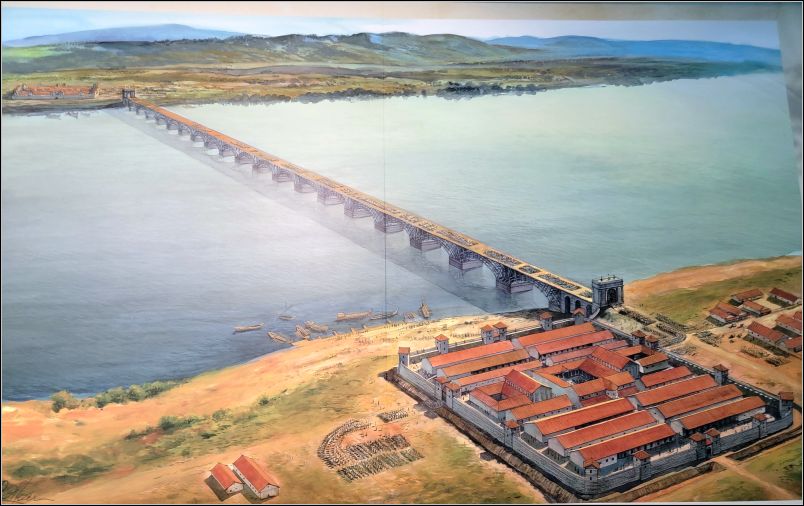
Right in the center of a natural depression, on the high terrace of the northern bank of the river, the Romans founded a Roman city. Between the two Dacian wars (103 – 105 AD), in order to assist with the army’s advance and with the role of protecting a vital strategic area, the Romans built a bridge over the Danube, as well as the first rock castrum (fortified place) on the territory of Dacia.
A natural barrier, the river was difficult if not impossible to cross, rightly called the Iron Gates. But still, Trajan was able to cross with his armies. After securing the victory over Dacia, he decided to built a bridge (103-105 A.C.), in order to bring supplies for the troops of his ongoing expansion campaigns.
Trajan’s Bridge was also called the Bridge of Apollodorus over the Danube after its architect and engineer Apollodorus of Damascus. Stone, brick and mortar were used for the construction of portals and pillars, cast in wooden beams laid in the Danube bed. On the outside, these cells were covered with limestone blocks to protect the core of the masonry. The upper part of the bridge was made of wood, with a height of 3 m and a width of 14.5 m. It has been estimated that approximately 200 hectares of oak forest were cut down in order cover the needed timber.

Although it was only functional for 165 years, it is considered to have been the longest arch bridge in total span and length (1,135m) for more than 1,000 years. The remains of the first and last pillars can still be seen on each bank of the river.

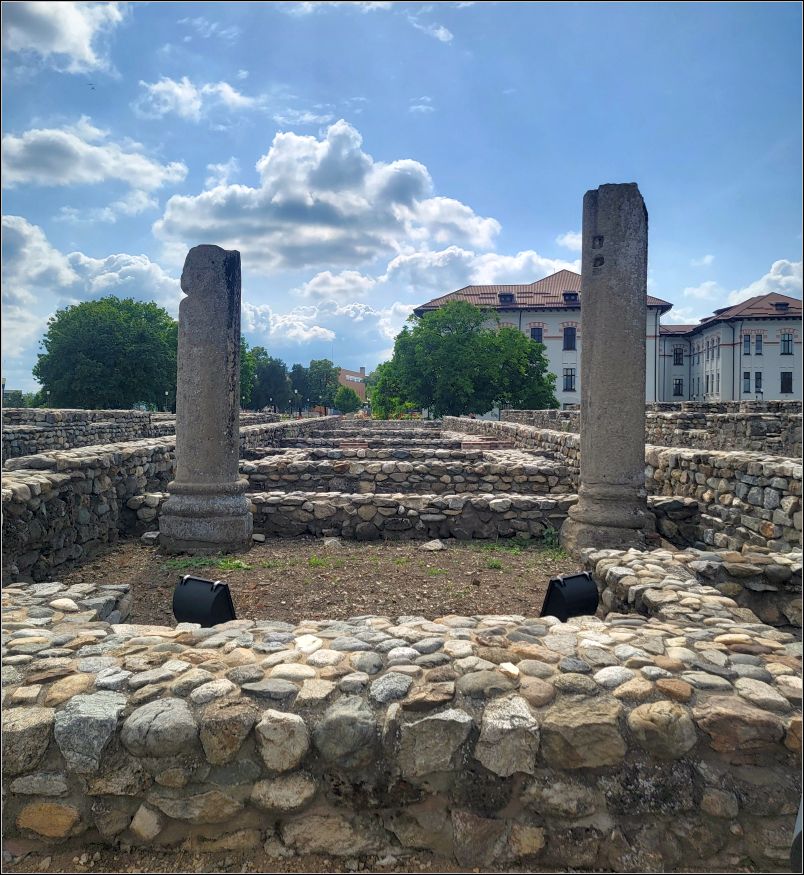
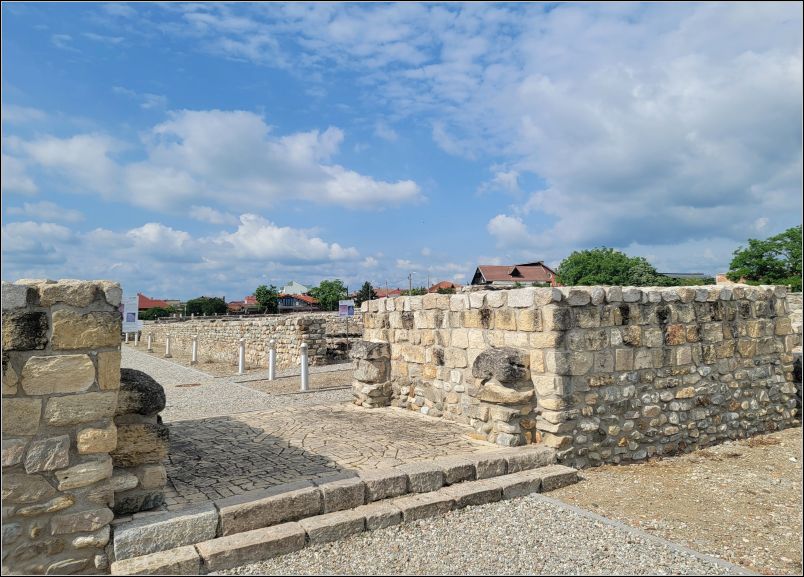
The castrum was built as a large and important complex. The central part was occupied by the Praetorium (the sacred courtyard, the chapel and the commander’s residence), the armories, sheds, and officers and soldiers’ rooms. This was the only Roman fortification that functioned from the 2nd century until the beginning of the 7th century, when it was finally destroyed by the Avars and Slavs. With a rectangular shape, and flanked by defense towers, the castrum had an excellent orientation and position overlooking the bridge from the high terrace of the river.
Under the reign of Hadrian, the city received the name Aelium Hadrianum Drobentese, and later it received the rank of colony of Drobeta (Drobetensium). The place was also given a second name Turnu Severin, meaning “Tower of Severus”, that came from a tower built to commemorate a victory by another Roman emperor Septimius Severus.

After the first war, Decebalus (the most iconic Dacian figure and the last Dacian king who unified the tribes into one nation) complied with Rome for a time, but he was never to truly accept defeat or remain a subject of Rome. As soon as he was able, he took revenge, leading several surprise attacks against the Romans. Trajan rallied his forces back in Dacia for a second war (105-106 AD), conquering the Dacian capital altogether, and annexing the southern half of Dacia as a province to the Roman Empire.
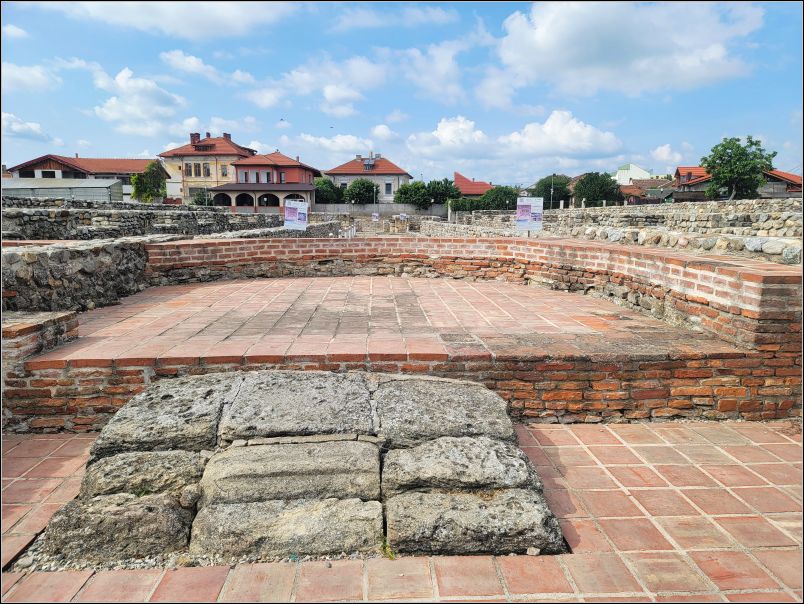
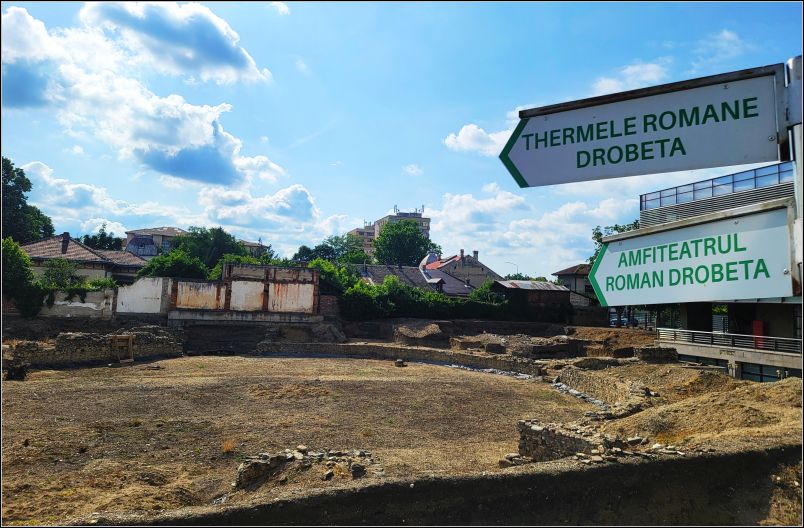
The years that followed, for almost 500 years, Drobeta played a key role in this entire area, reason it became the most important city of Dacia Inferior. The castrum, the amphitheatre and the thermae show the existence of a big Roman establishment, being able to house 500 soldiers, and the coins from years 309 – 310 and other artefacts found during the excavations make this site one of the longest Roman settlements in all Dacia – modern Romania.


Even after the withdrawal of the Roman army and administration from Dacia in 275 AD, the Roman Empire kept and controlled their existing and new fortifications in the north of the Danube River until the 7th century. Left without real defence, they slowly became the target of other attackers, such as the Huns, Avars, Slavs, and later more invasions by the Tatars, Hungarians, and Ottomans.
Tip(s) of the day:
* A visit to this area wouldn’t be complete without taking a speedboat cruise and seeing the heights of the Iron Gates gorge; Danube cruises are available from both locations of the city of Orsova, and smaller village of Dubova from 1.5 hrs to 3-4 hours;
* If you are interested in learning a bit of history from this part of Europe, you can visit the Iron Gates Region Museum in Drobeta Turnu Severin, opened since 15 May 1972;
*Where to stay: We stayed overnight in Orsova, but seasonally you can find great options in the village of Dubova.
 1000 Places and Memories
I’d like to see the bridge when it was new, very interesting history!
LikeLiked by 1 person
Indeed, Romans were really well known for their advanced engineering accomplishments.
LikeLike
Not an area I know much about, so thanks, Christie.
LikeLiked by 1 person
💛💛
LikeLike
So much history in that region. It’s quite amazing that there are still many artefacts and ruins left from so long ago. Maggie
LikeLike
Compared with other Roman sites across Europe, these ruins are not in good shape, but I wonder sometimes how long the bridge would have lasted if it hadn’t been intentionally destroyed when they withdrew their armies..
LikeLiked by 1 person
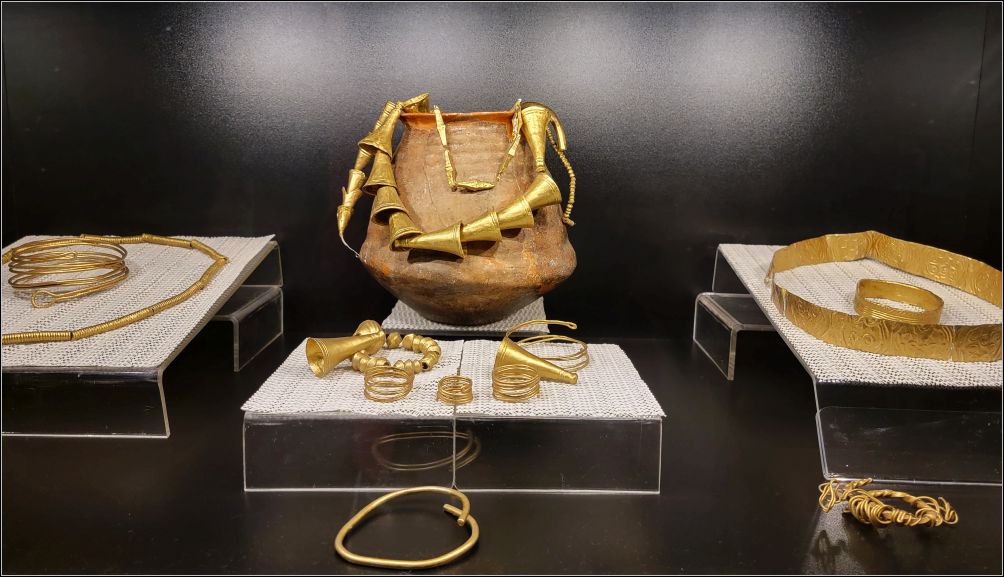
I’d never heard of Drobeta, so I really appreciated reading your excellent post and viewing your photos. I continue to be staggered how many spectacular artifacts were found from ancient times as evidenced by the gold objects in the museum.
LikeLiked by 1 person
It is said that hundreds of kilograms of gold and up to half million kilograms of silver were captured as a result of the Dacian wars. Not to mention about all the mining operations the Romans put in place in that area, all of the precious metals taking the roads to Rome, of course.. luckily some of these treasures were saved over time.
LikeLiked by 1 person
Your comment made me think of the masses of gold we saw in South America!
LikeLiked by 1 person
True, and that is just the leftover, compared with what conquistadors took away😊
LikeLike
Indeed!
LikeLiked by 1 person