
Established in 1893, Algonquin Park is the oldest provincial park in Canada. It is located about 3 hours north of Toronto, and its unique mix of forest types, contrasting with the colourful Canadian Shield, along with over 2,400 lakes and 1,200 km of streams and rivers, and thousands of square kilometres of forests, makes the park one of the most famous in Ontario.
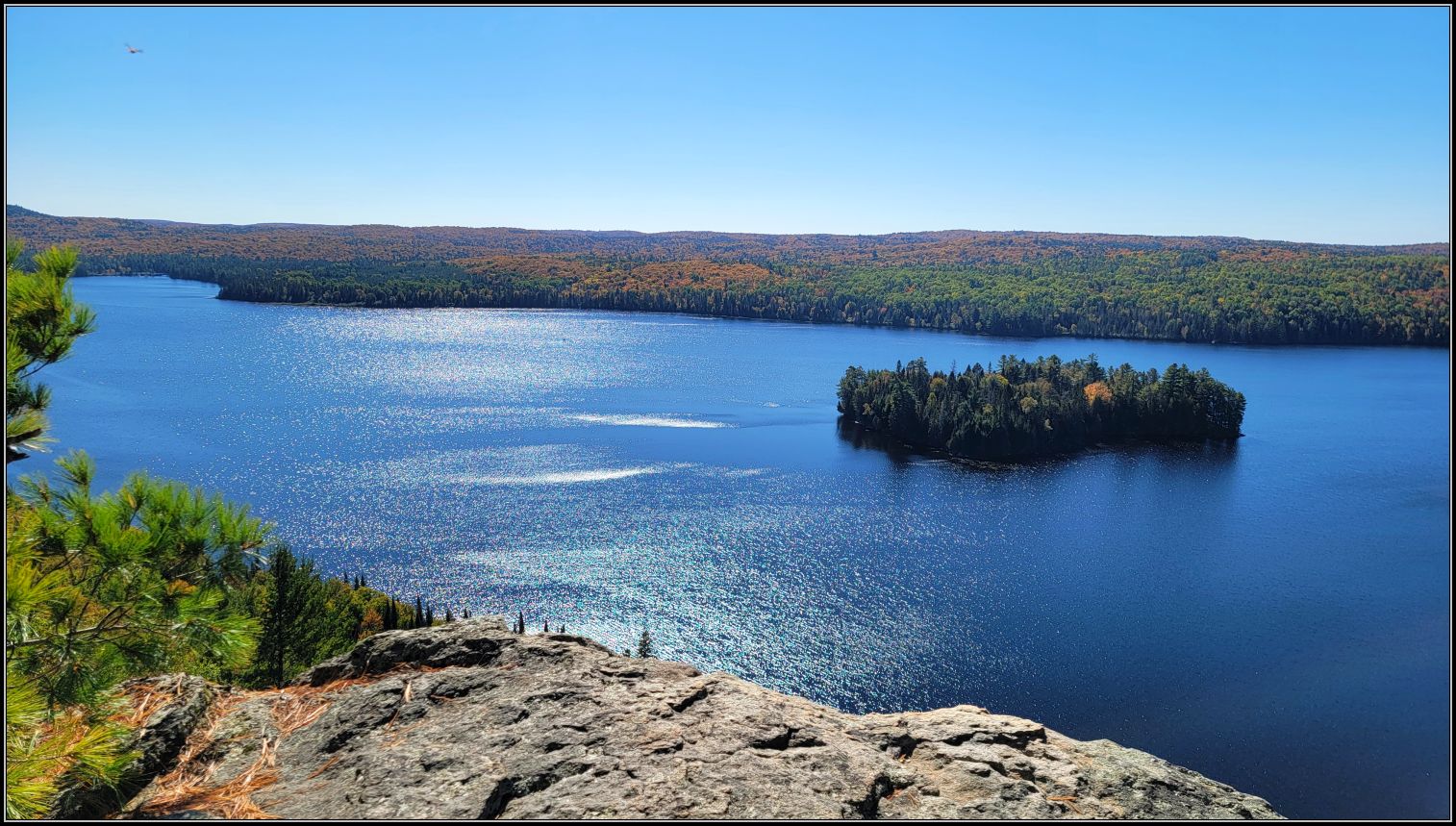
As the promise of a beautiful autumn came closer, my itchy feet reminded me of our previous Top of the Giant hike. Never tired to get on a new adventure, I was ready to finally hike two of the most rewarding trails in Algonquin park while admiring the fall foliage.
The last weekend of September is said to be the peak season, when the maple leaves reach their maximum brightness. Although 2025 had a dry summer and some of the trees had lost some of their leaves by mid-September, some areas had recovered from recent rains. So, we decided, along with thousands of other people, to enjoy the beautiful weather and the stunning scenery of Algonquin.
The park offers 19 interpretive trails, ranging in length from 1 to 11.7 km and three multi-day backpacking trails, rated from easy to difficult. We did a series of short trails on one of our previous visits, in 2019, when we fell in love with the park. If you want to read more about them, you can read here. This time we wanted to continue our journey, looking for more challenging hikes.
***
~Day 1
Peck Lake Trail
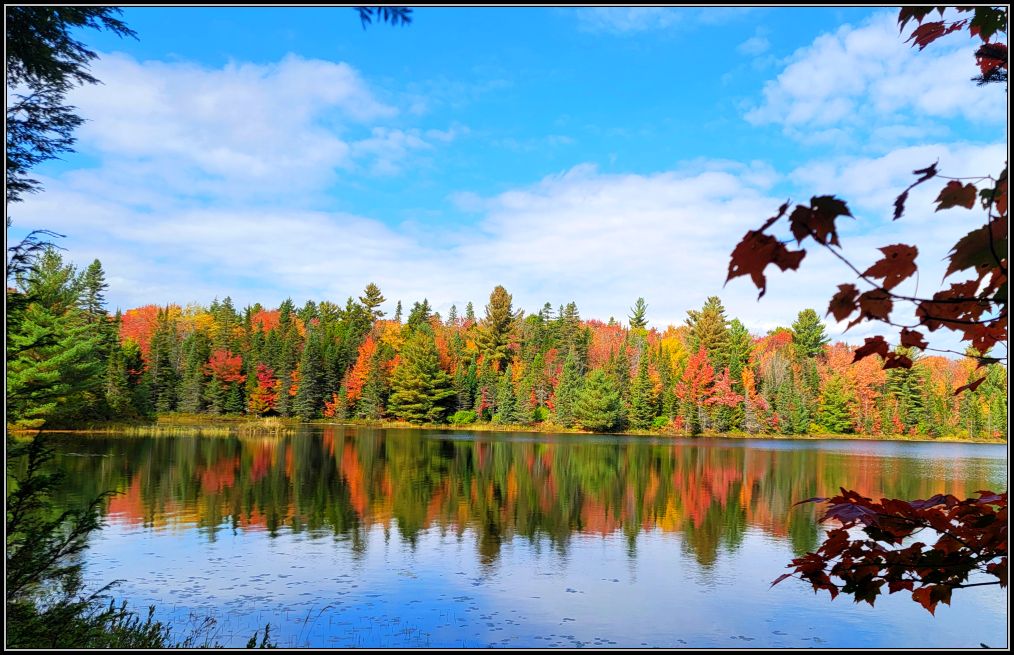
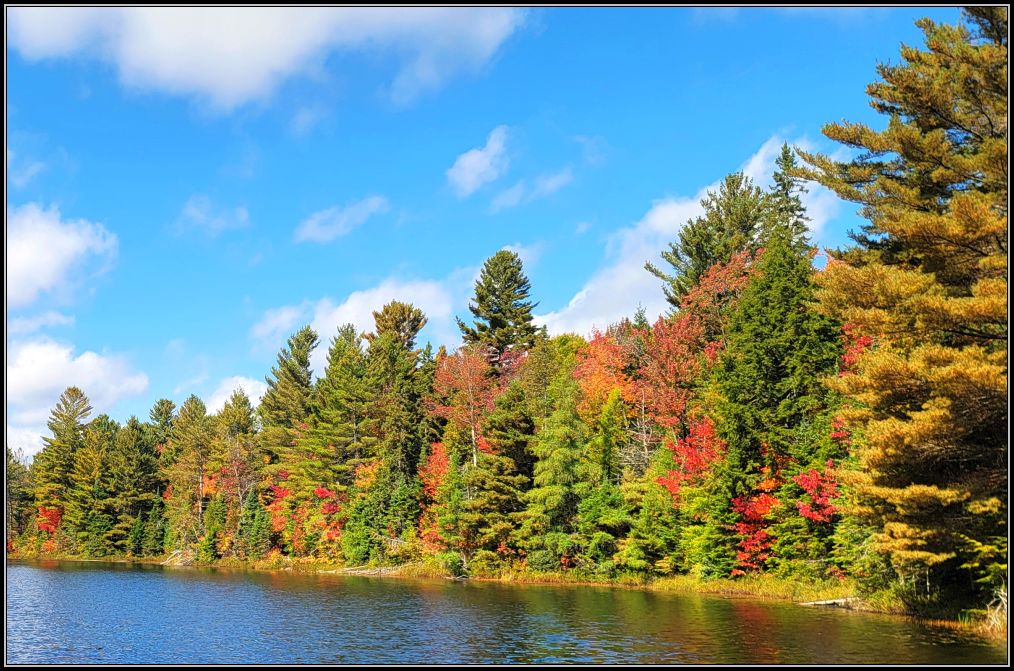
Sheltered from the wind and waves, in a peaceful setting, lies Peck Lake. As soon as we first saw the lake, we knew we were going to love this trail. Marked as moderate, I think this 2.3 km trail is rather easy. There are quite a few roots and rocks poking out in the way, but what would a forest trail be without them?
The ever-changing light of the dense and colourful fall foliage captured our attention, delighting our souls and minds. This hour-long walk had just warmed us up, the more we saw the more we wanted to see!
Hemlock Bluff Trail
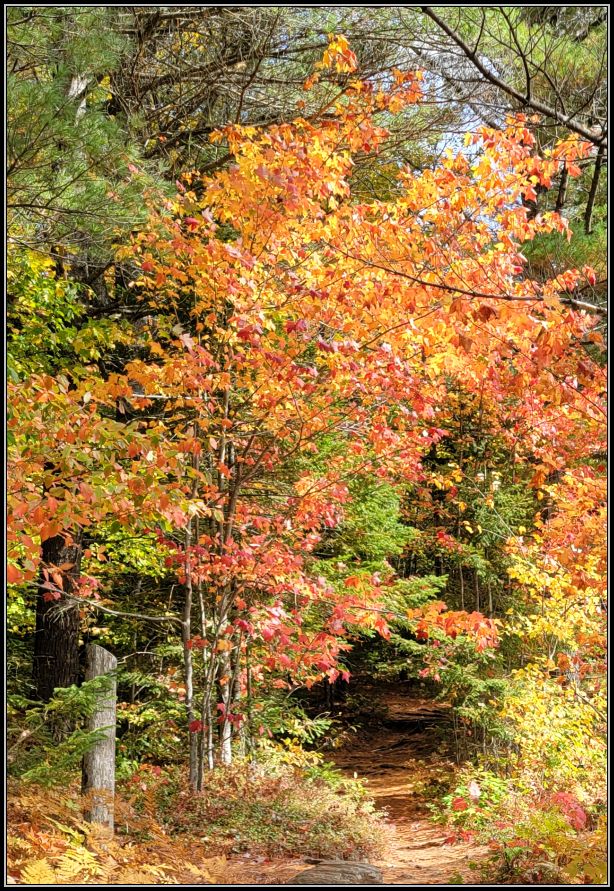
Not far from Peck Lake is the Hemlock Bluff trail. This 3.7 km loop took us through a variety of mature hardwood and coniferous forests, including hemlock. The path is wide and clear and travels through some beautiful woodland. Although the temperatures were quite warm, we enjoyed being in the shade as the sun filtered through the foliage creating lovely rays of light. The trail starts at 470 m and climbs to 510 m in about 1 km, putting us on the cliffs above Jack Lake. We didn’t realize how much we climbed until we came to a gap in the treetops, allowing us to glimpse Jake Lake. From there, we began to descend until we reached the shore of Jack Lake.
Rated moderate probably for the elevation gain of 136 m, it took us just a little over an hour to complete.
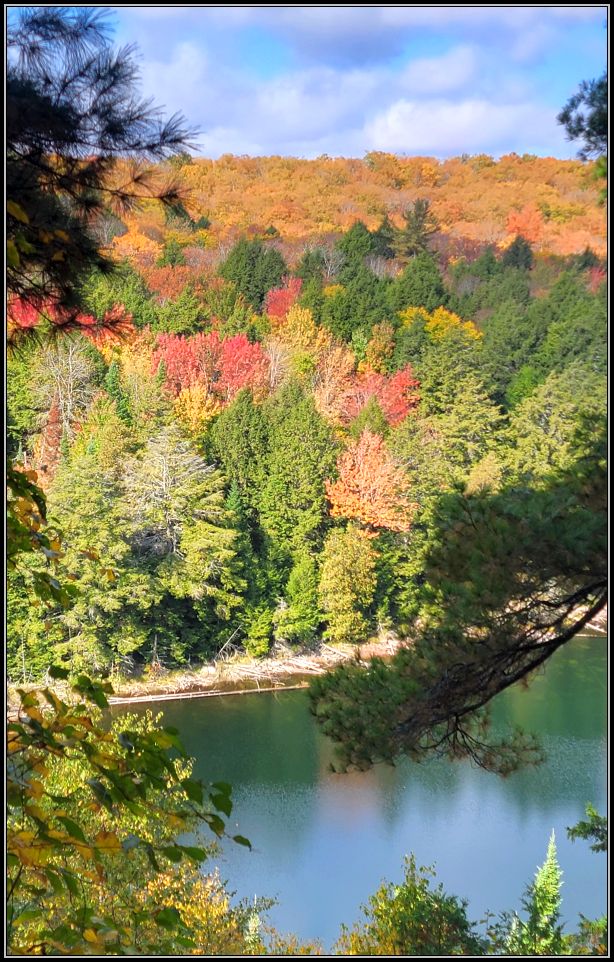
Mizzy Lake Trail
We left the Mizzy Lake Trail towards the end of the day for a reason. This is an 11 km loop that visits several small lakes and ponds. And it offers excellent wildlife viewing opportunities.
We arrived at the parking lot around 2 pm and while our accompanying friends were getting ready, I was already asking people around if they’ve had any exciting wildlife spotting. We got so pumped up when the person next to our parking lot told us that he has seen a moose around post #9!
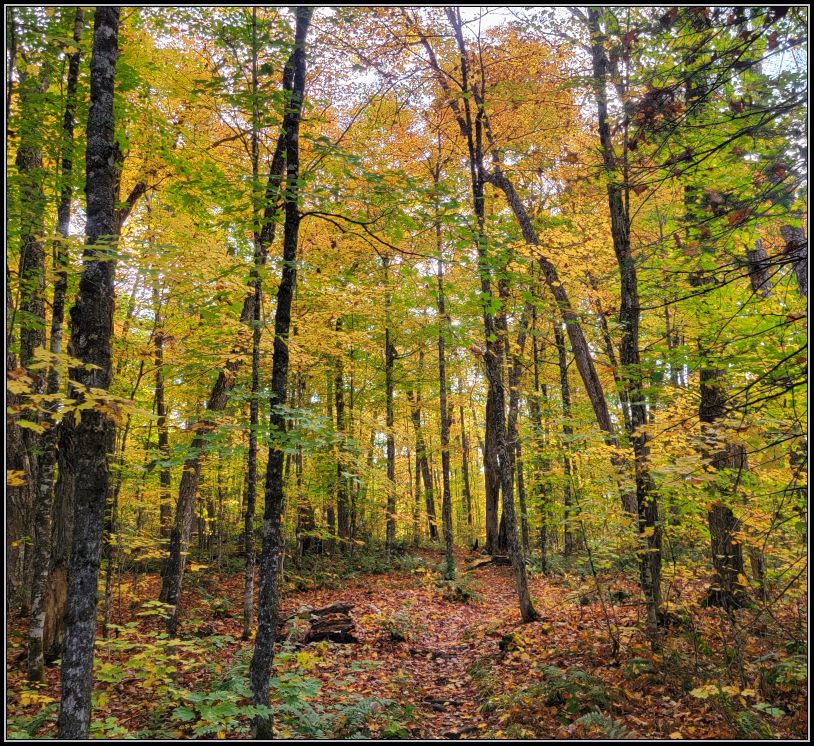
Mizzy Lake trail has been on my bucket list for a couple of years now, and if we get a chance to see some wildlife, it’s even better. This entire area is actually a lowland area, with lots of lakes, ponds and marshes. Muddy areas are not uncommon, especially in the spring or after rain, and several boardwalks connect the trails, both to protect the environment and to create a clean path for visitors.
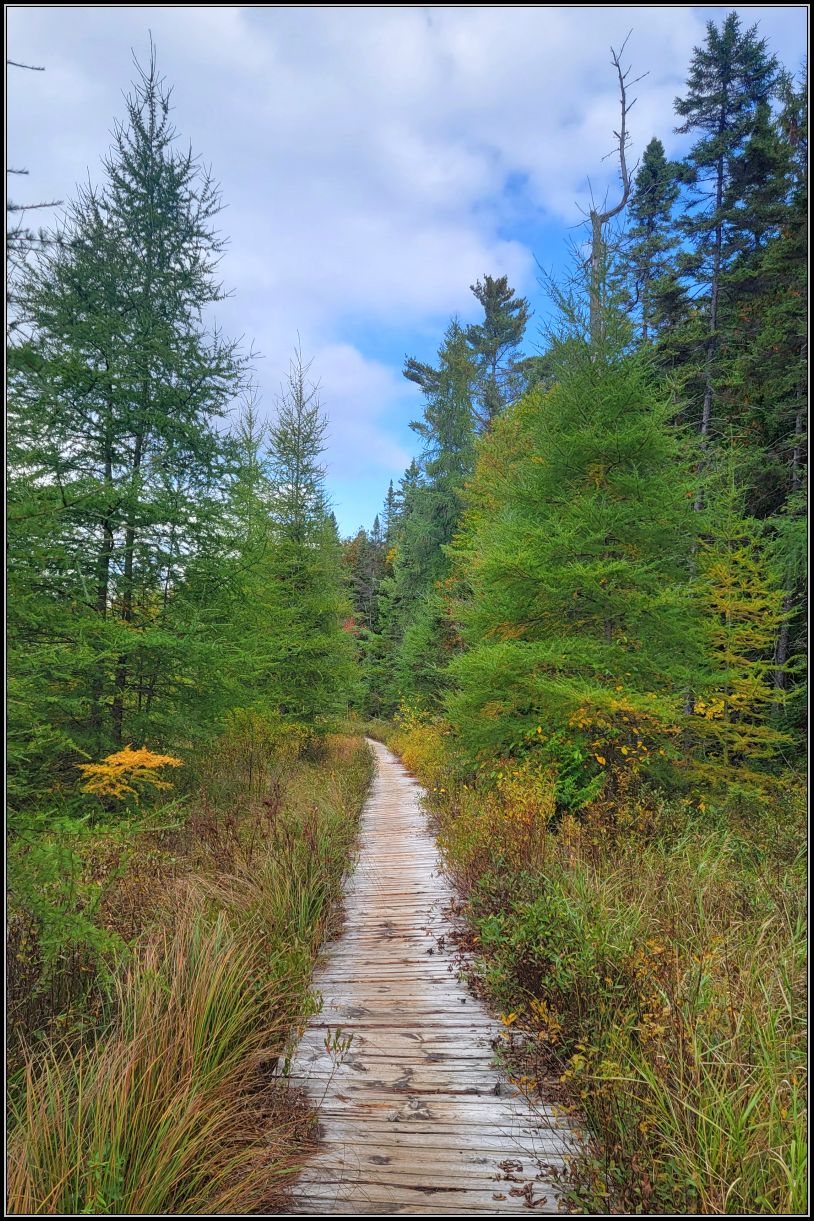
The trail is considered fairly “flat”, meaning there isn’t much elevation in this area. But little did we know about the continuous ups and downs we had to go around the roots and rocks. The surprise came at the end of the hike, when our app showed us a total of 242 m of elevation gain.
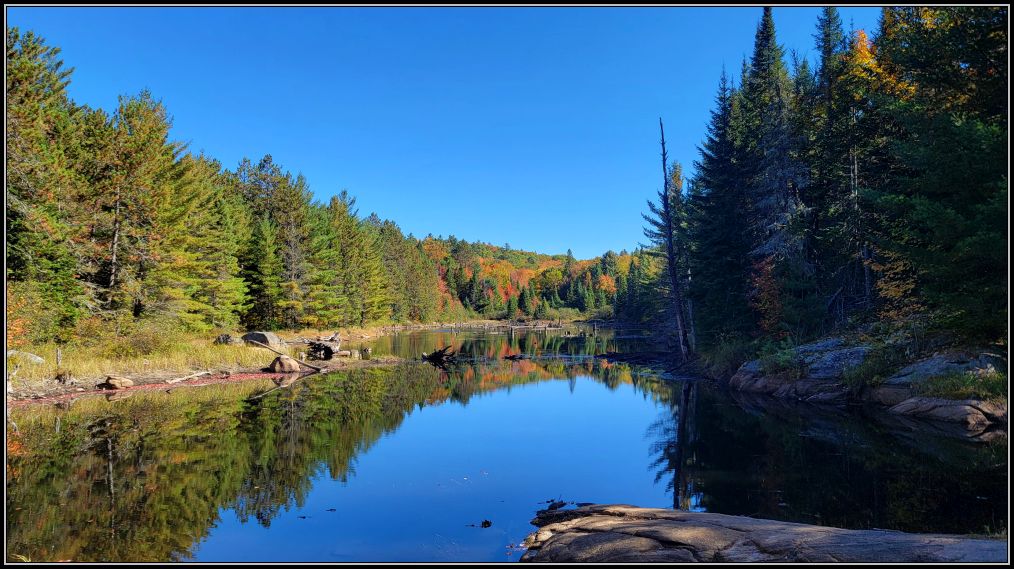
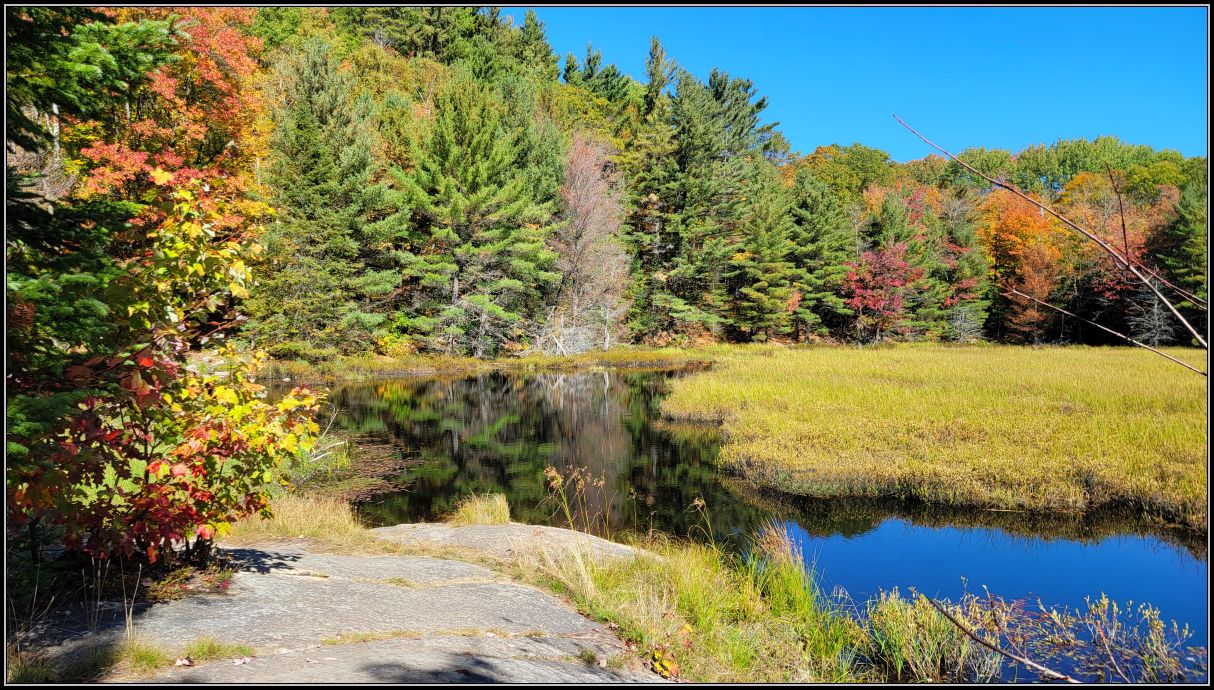
The first unnamed lake delighted us with its warm reflections, it was a love at first sight, making us realize how lucky we were to be able to finally get here. The trail meanders nicely through patches of forests and around some pretty lakes, and we quickly realized that we already passed Mizzy Lake!
When the path traits changed, we found out that we were walking on one of the many abandoned railbeds built across this park in 1894-96. It’s hard to believe that this railway was one of the busiest in Canada during the First World War, with 35 to 40 trains per day, carrying especially logs and Western grain.
West Rose Lake was our next stop. It’s said you can have a good chance of seeing moose here, but no matter how much we looked around and stretched our eyes in all directions, we couldn’t spot any wildlife. Instead, this picture-perfect spot stole another little piece of my heart. The marshy lake was the perfect place to embrace the sunny skies, a totally different ecosystem than we’d seen in the entire park.
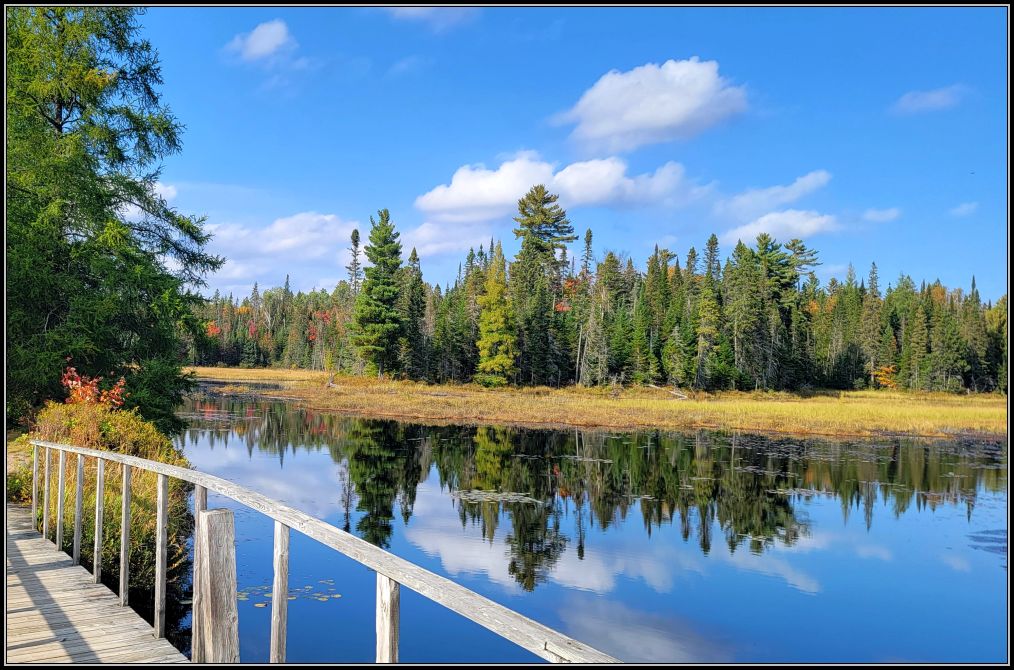
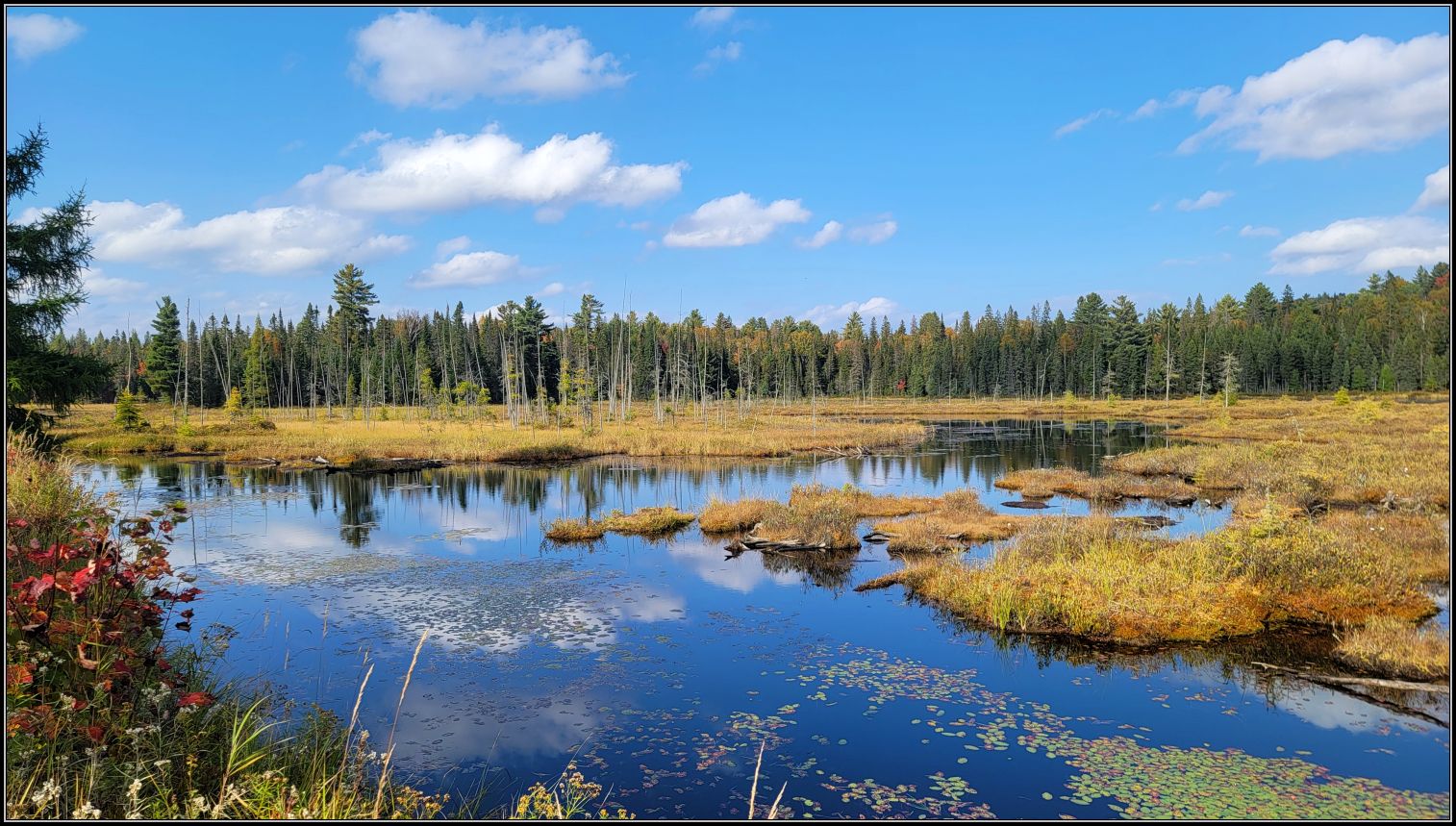
We passed by posts 6 and 7, which are located near Wolf Howl Pond. This pond was named in the early 1970’s when the meadow at the far end of the pond was used by a pack of wolves as a “rendezvous” site. It wasn’t a good month to hear the wolf howls, nor was it the right time, so we moved on, soon arriving at post#9. We soon had to give up our hope of seeing moose; the sun was shining through, and no wildlife sighting whatsoever.
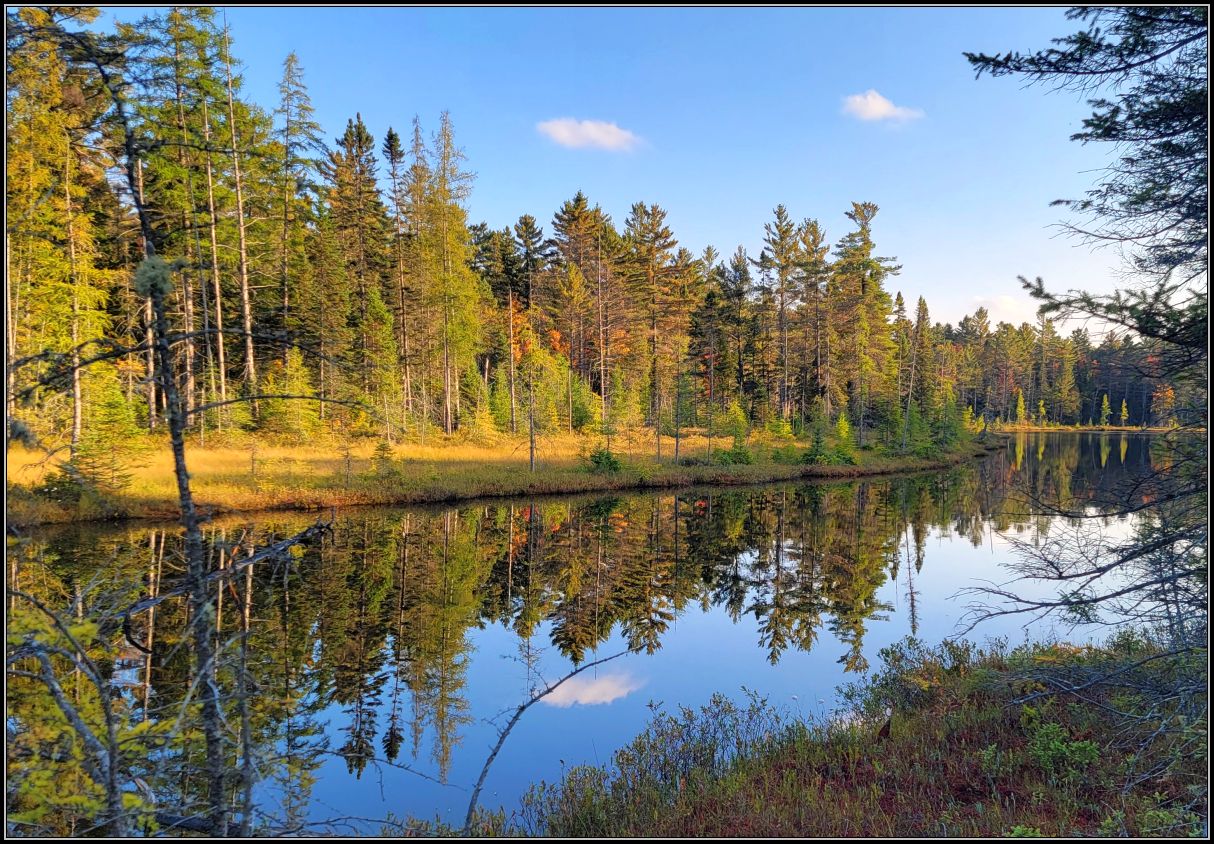
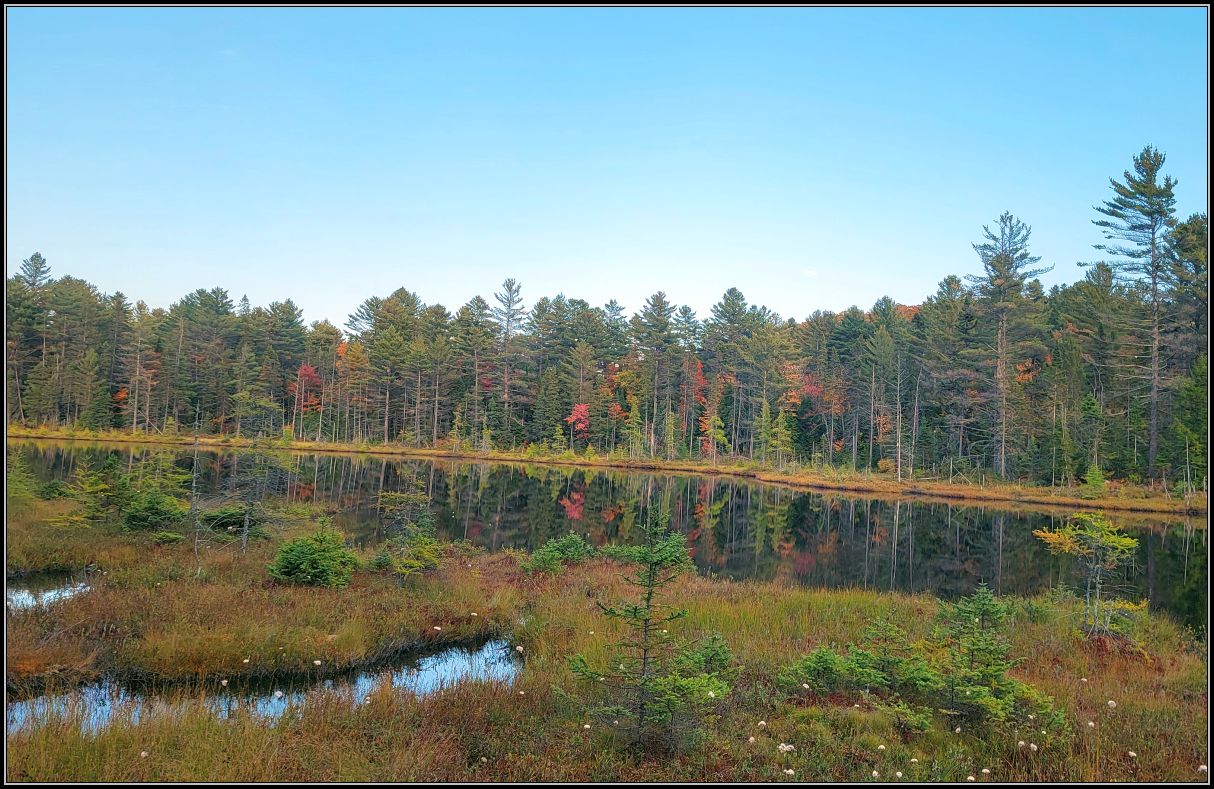
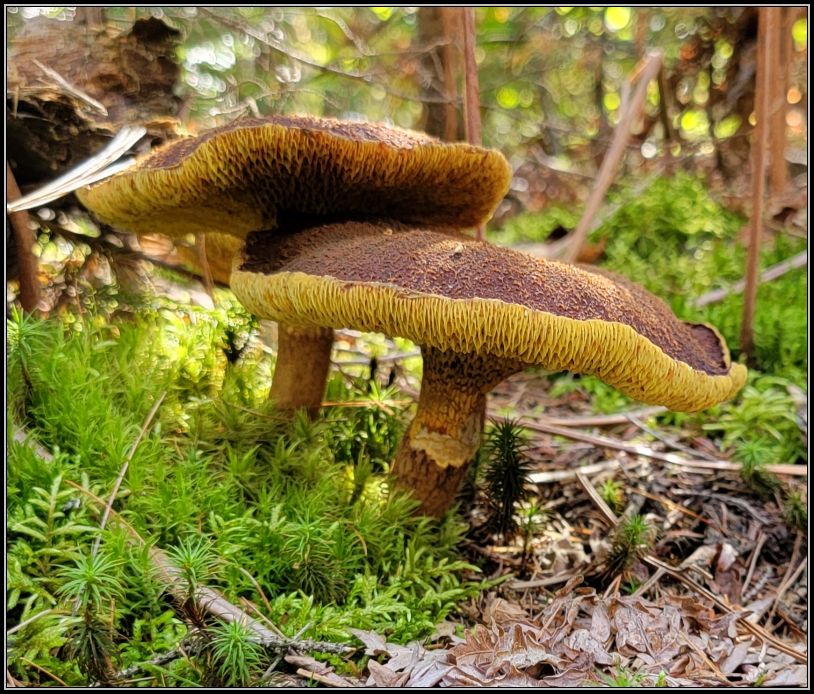
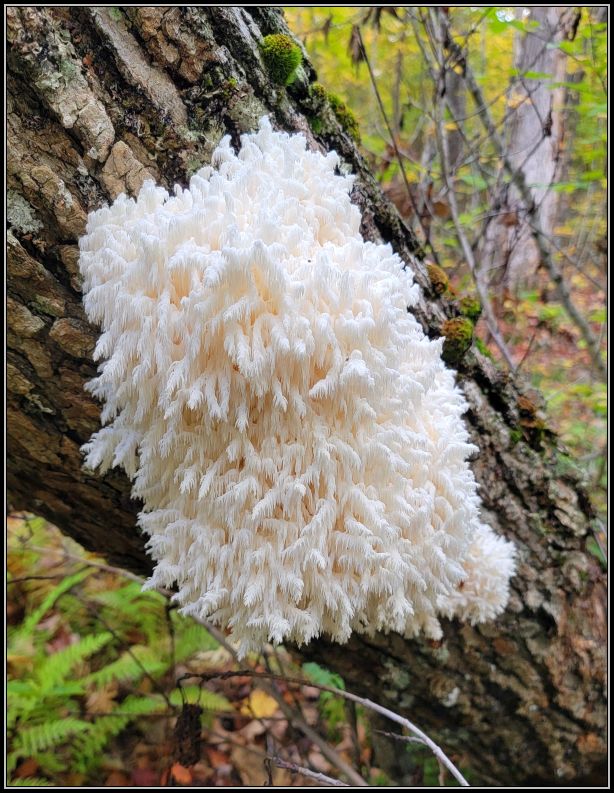
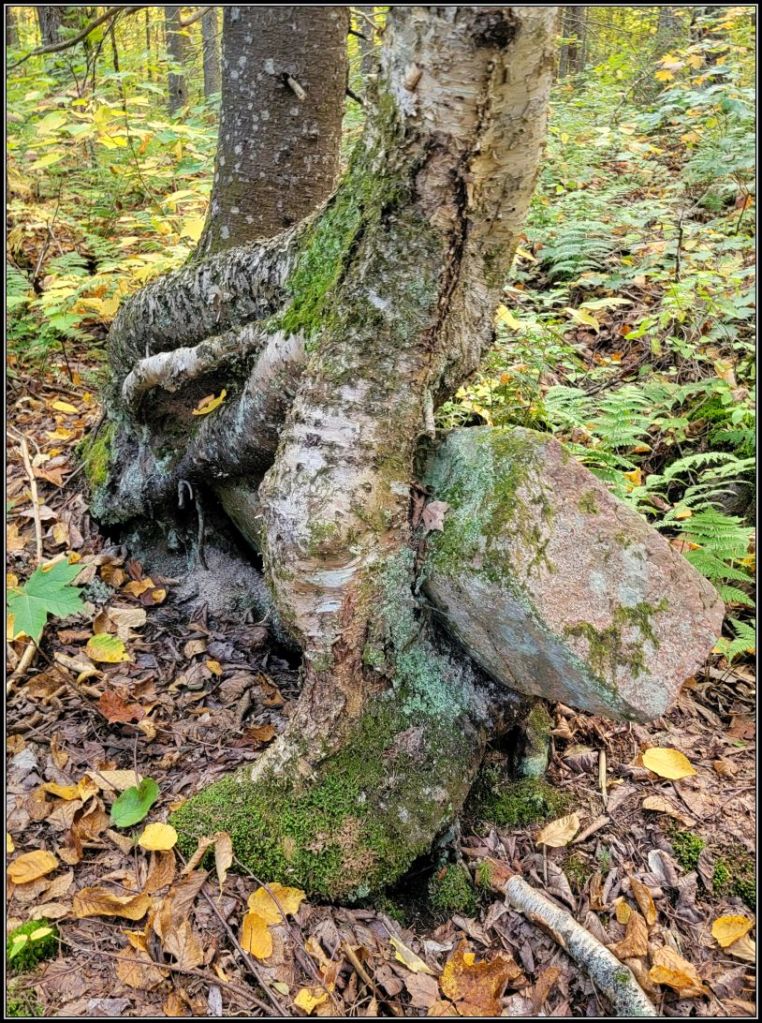
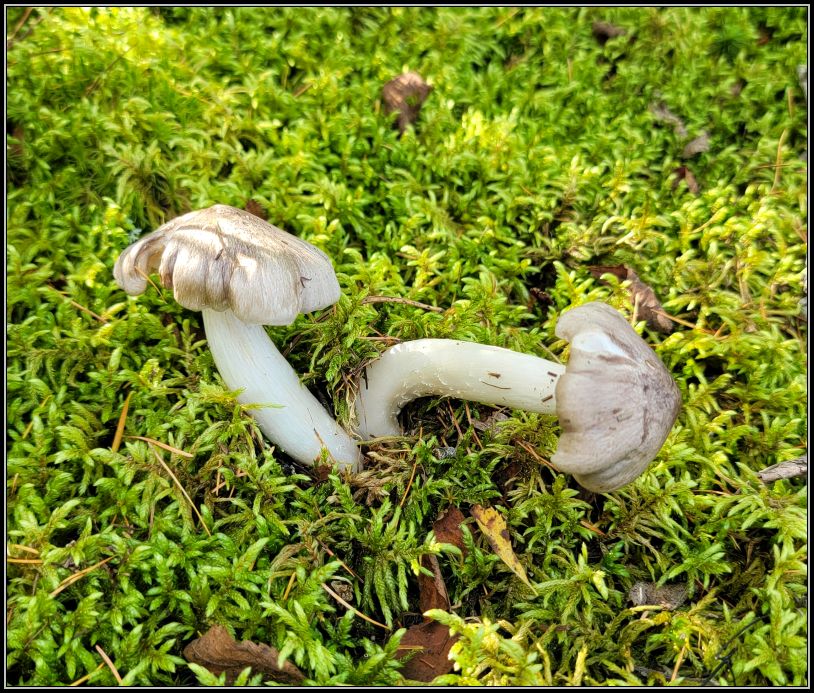
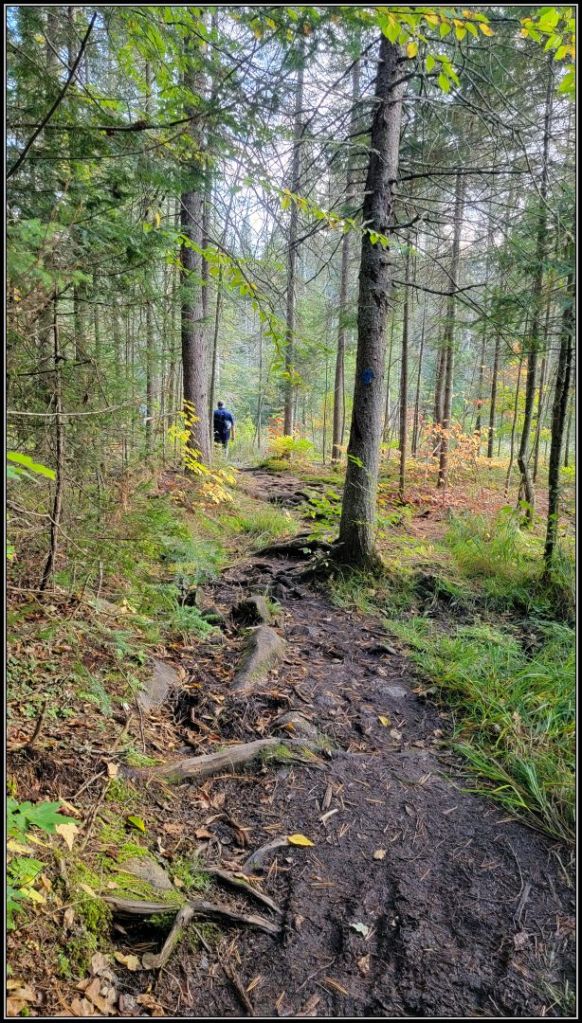
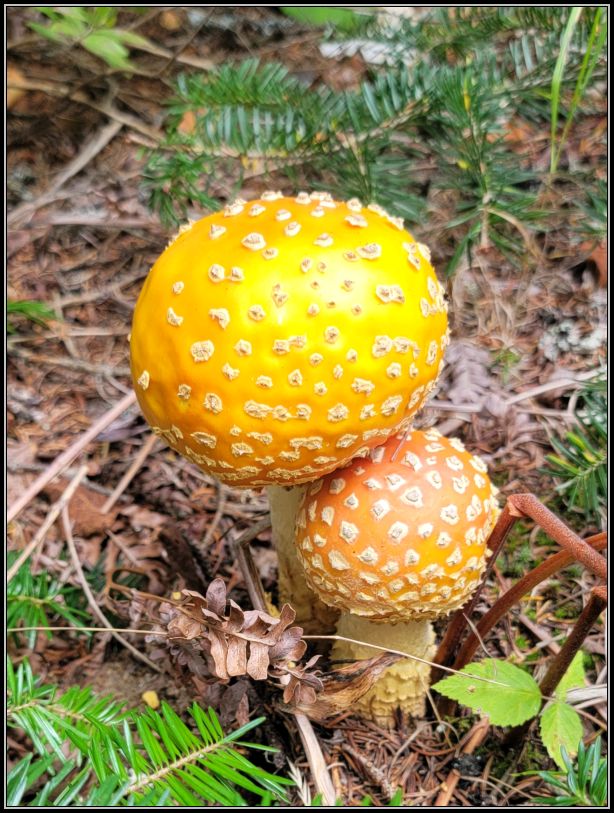
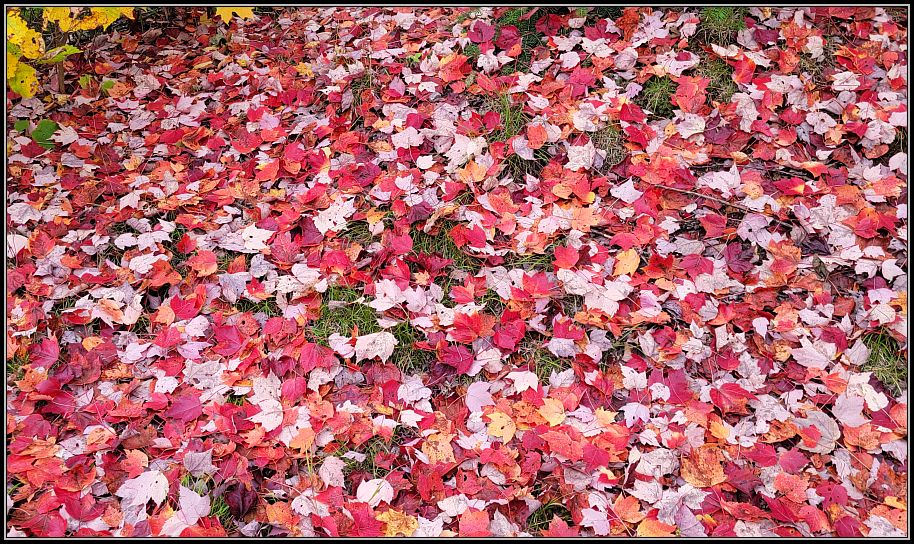
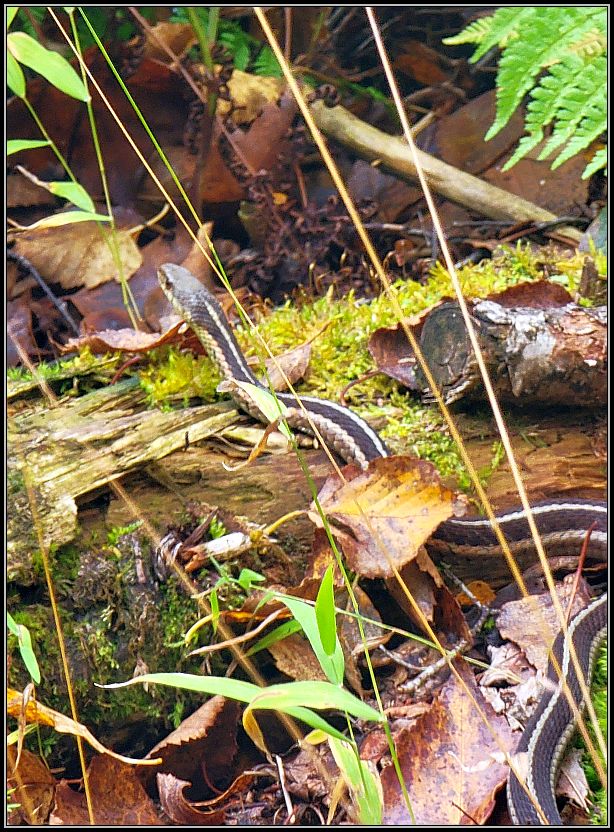
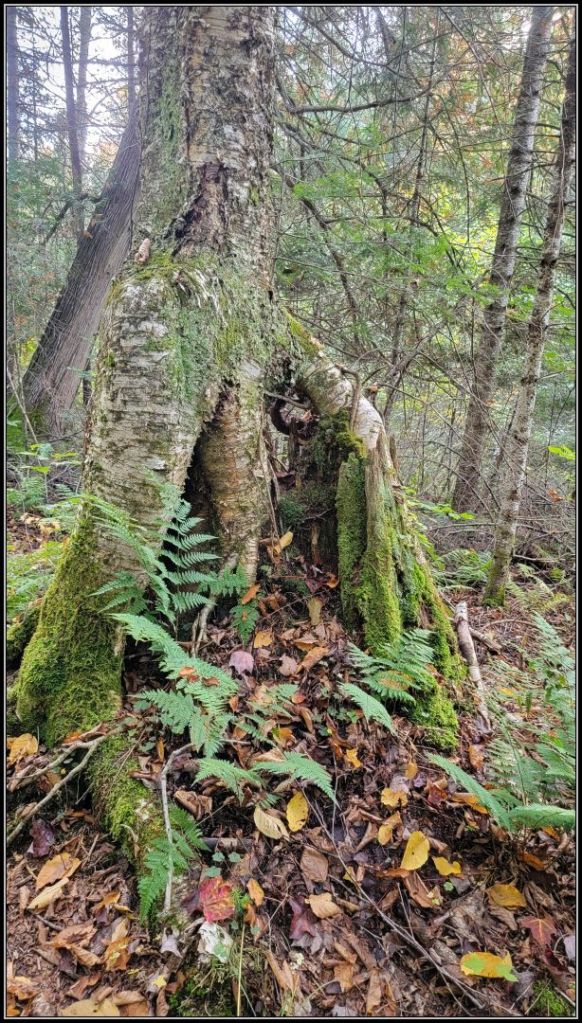
After a short break, we set off, ready to resume our hike, but here we were, still a long way to the parking lot. The path took us through forested areas again. All over the undulating landscape is a crisscross pattern of trees and cracked stones, where mushrooms poke their heads out to greet people, and trees bend their trunks and roots making you wonder if they really want you to stumble over. The golden hues of the maple trees enveloped us, making us forget about the city life and everything else.
~Day 2
Centennial Ridges trail
One of the most demanding trails in Algonquin park, but with some of the most outstanding scenery, is the Centennial Ridges trail. The trail takes visitors along two parallel high ridges on a 10.6 km loop, offering the most beautiful panorama in all of Algonquin Park.
There are 12 marked viewpoints, and their significance is explained in the small booklet found at the beginning of the trail.
The trail markers go clockwise, and so we followed them. The path starts off on a gentle incline, winding through a deciduous forest, where I fell in love with the golden hues all over again. I was already used to the numerous rocks and especially the exposed roots that seem to be everywhere, and in no time we reached Bartlett Promontory (post#3), where we had our first bird’s eye view from above.
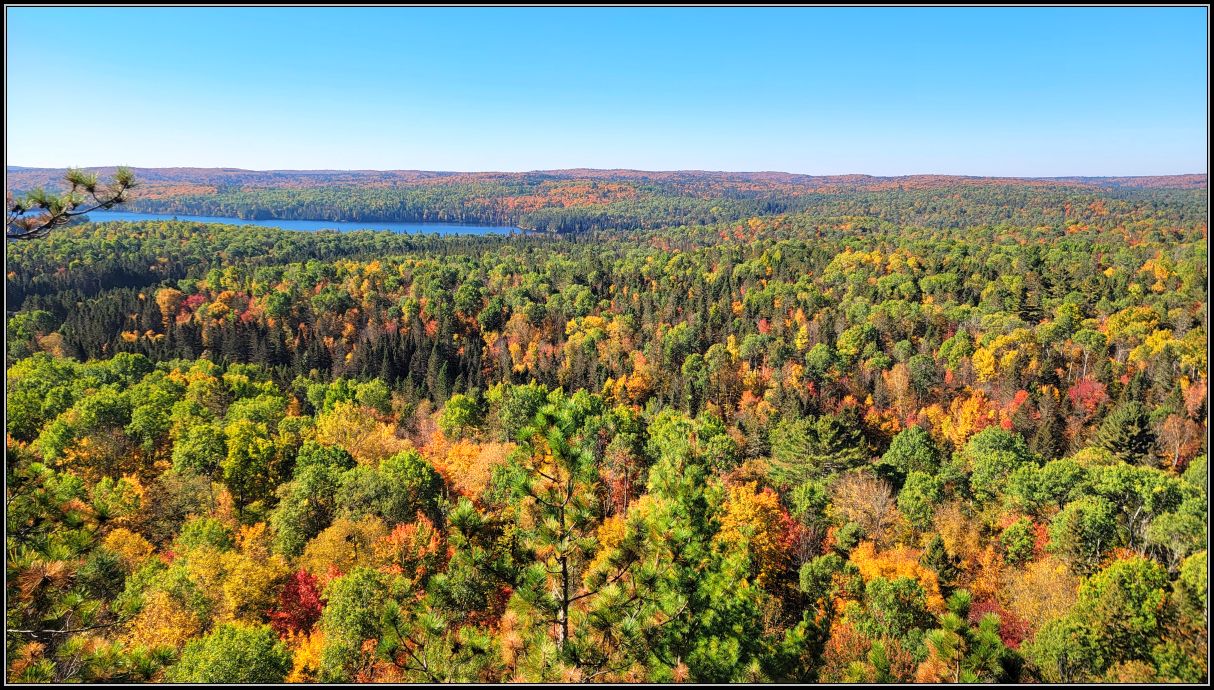
This winding and narrow trail is particularly challenging, requiring a significant number of ascents and descends to explore its five cliffs. After passing a beautiful unnamed lake, we began our real and most demanding ascent. We timed our visit at the end of September, around the peak season for maple leaf viewing, and the canopy was a sea of red, orange and yellow. The path was full of colourful maples and poplars, contrasting with the beautiful white birch trees.
By the time we reached the top of the second ridge, the best spot for taking pictures was already taken, but as we continued on, we found more spots, each more beautiful than the last. The top of Mount MacDougall (post#4) offers sweeping views over the surrounding hills, treetops and the lakes below. Our challenging ascend was well worth it!
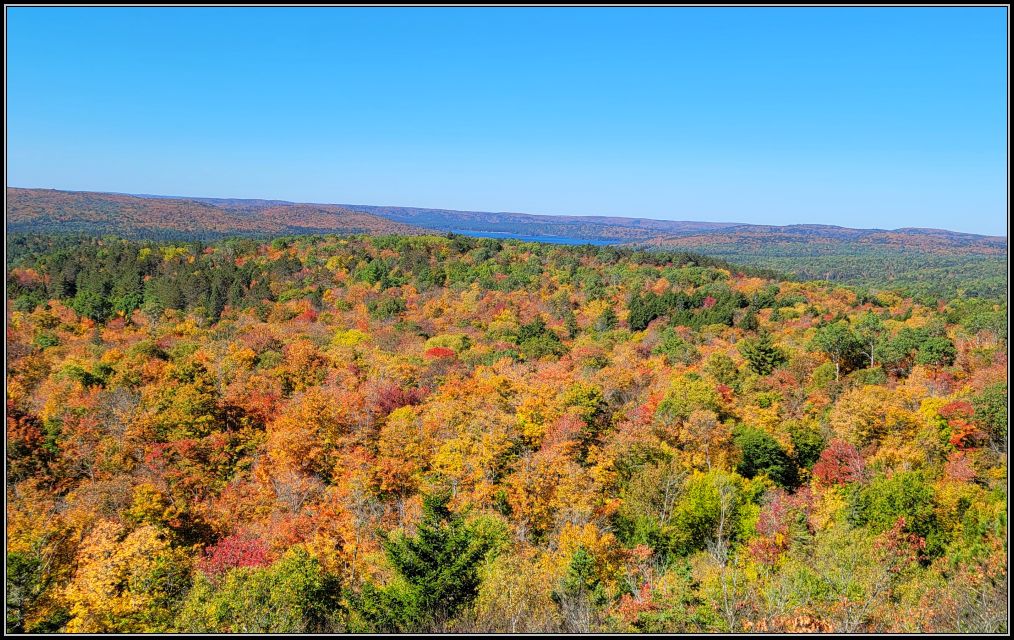
The walk along the ridge was fun, and although we had to be more careful with our steps, especially near the edge, we felt like little giants walking on top of the world.
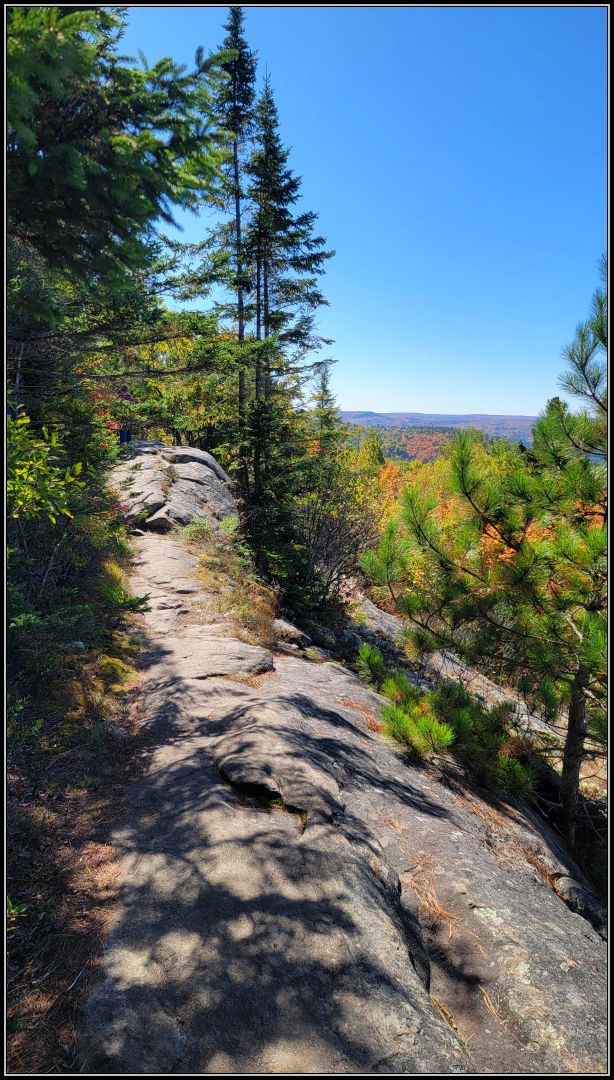
This trail was opened in 1993 to commemorate the centennial of Algonquin Park. Its various lookouts pay tribute to the eleven historical figures who contributed to the formation of the park as we know it today, as well as to its popularity as a prime location for nature appreciation.
More ups and downs followed, and more downs and ups. The trail is not rated difficult for no reason!
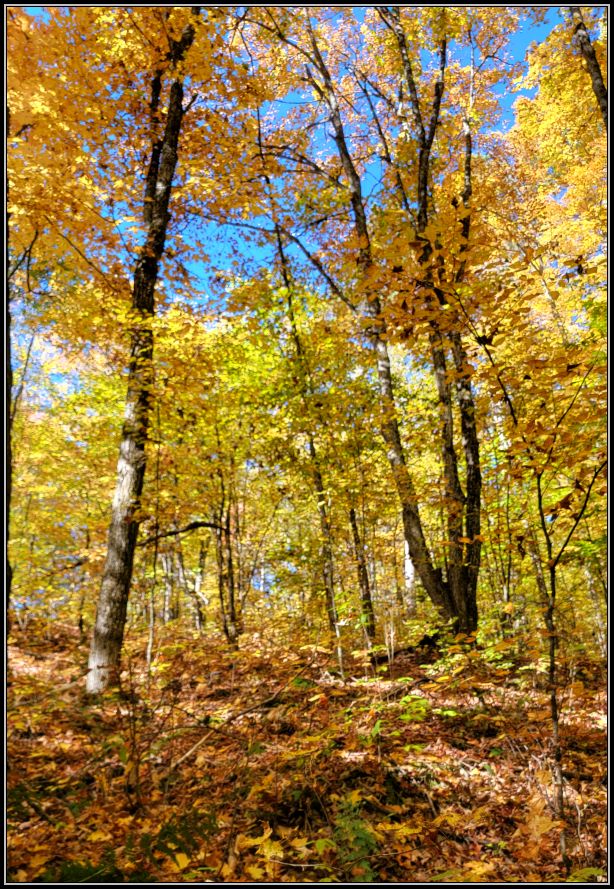
Between the posts # 4 and 7 three of the ridges followed. We were so happy and very grateful to see clear skies and mild temperatures just perfect for a day out in nature. At post #5 we found ourselves at the highest point along the trail, at just under 550m elevation.
After post # 7 we started a serios descend until we reached Cloud Lake where we took an extended and well-deserved break. I didn’t really want to leave the peaceful spot we found along the lake, but we knew we still had a good stretch until we could declare this trail finished.
We kept walking; which seemed quite a long time. But when the views and company are amazing, time flies, and we managed to reach the last cliff before we knew it. The first glimpse of the Whitefish Lake made us want to see more and we were quite disappointing to see so many people around these cliffs. The views are amazing from here, between posts # 10 and 11, which is the last ridge on the trail. But many people prefer to hike only this section, counterclockwise, rather than the entire trail. No wonder, since everyone wants to see one of the best views in this park.
We managed to find an empty spot to take some pictures, and gazed into the distance for awhile at the shimmering lake, mesmerized by its beauty and vastness.
Tip(s) of the day:
* At the highest point, you will be 150 m above the parking area. However, as the trail includes several significant ascents and descents, the total elevation gain is 440 m;
* It is moderately challenging hike with a lot of climbs and descents; it took us 4.5 hours in total, few breaks included;
* Also, note that there are no railings at the top of the cliffs, be extremely vigilant and keep children close.
~ visited in September 2025
 1000 Places and Memories
I have to admit I did not know about Algonquin park. What an amazing and huge park with so many lakes, streams and rivers and beautiful forests. You certainly had a wonderful time there. Your photos are beautiful, the colors, and especially the photos of the reflections in still waters,
LikeLiked by 1 person
Indeed, with so many trails to choose from and such beautiful weather, we couldn’t have asked for more!
Thank you, Thomas and have a nice week ahead!
LikeLiked by 1 person
Have a nice rest of your week and weekend ahead you too
LikeLiked by 1 person
Beautiful pictures of Algonquin, Christie. We visited 18 months ago; such a gorgeous park.
LikeLiked by 1 person
Thank you so much! Happy Monday🌞
LikeLiked by 1 person
Fabulous colours and beautiful trails, Christie xx
LikeLiked by 1 person
Autumn is such a special and colourful season here in Ontario🥰
xx
LikeLiked by 1 person
Ontario has such beautiful autumns with a variety of colours and you had great weather to see them. In Alberta, and Manitoba as a kid, our falls are more yellow with very little red. Maggie
LikeLiked by 1 person
True, Ontario has very colourful autumns! It is the best season to visit Ontario actually😊
I keep telling myself that one day we should go exploring Quebec during the fall season too, I think it could be even more colourful!
Christie, xx
LikeLike
Sheer beauty!
LikeLiked by 1 person
Thank you so much!
LikeLiked by 1 person
Wow, just look at those beautiful autumn forest colours, making woodlands a stunning spectacle for walks and photography, dear Christie. The scenery of the park is also beautiful – I love a combination of pristine forests, lakes, and rivers as they provide incredible natural beauty. Thanks for sharing, and have a good day :)I hope your New Year is off to a good start. Aiva xx
LikeLiked by 1 person
Thank you so much for your kind note, always appreciated❤️
Have an amazing 2026, Aiva, all the best to you and your family! xx
LikeLiked by 1 person
Thanks so much 😊 xx
LikeLiked by 1 person
As an Ottawa native, Algonquin Park was a favorite getaway for our family, Christie. I didn’t realize the park was almost equidistant from both Ottawa and Toronto, nor that it had so many lakes
What a fantastic resource for the people of Ontario! Thanks for describing it so eloquently and doing it justice.
LikeLiked by 1 person
It is the most visited park in Ontario, it is said it draws over 1 million visitors annually. They sold out the day-use permits the weekend we went, it was that crowded😍
Have a lovely day! xx
LikeLike
Making me nostalgic for leaves! The fall colors and the blue, blue water are just beautiful.
LikeLiked by 1 person
Me too🌞
Have a wonderful 2026, Lexi! xx
LikeLike
Algonquin is one of my favourite parks. It’s one of the most famous for a reason! Glad you got to visit when the leaves were changing colour. Your pictures are beautiful. I would like to challenge whoever described Mizzy Lake Trail as flat!
LikeLiked by 2 people
Hehe, right?!😍
Happy Friday, Linda! xx
LikeLiked by 1 person
wow. looks like the perfect sort of place to go for a hike! colours, scenery, everything!
LikeLiked by 1 person
Yes, it is, especially during the fall, when the leaves change colours! It is my favourite season:)
Hope all is well, Andy!
LikeLike
Canada has always been on my bucket list to visit. I’ve heard so much about its parks and would love to visit some of them. Your post showed another side of Algonquin Park – very stunning especially in the change of seasons. I think whenever there is a lake along a hiking trail, it probably will deliver some nice views. The autumnal trees along Peck Lake look stunning, and the view atop Centennial Ridges trail looked every bit worthy of the difficult hike. ‘where mushrooms poke their heads out to greet people’ Love how you said it – the mushrooms looked delighted that you took their photo 🙂
It’s always lovely when you trails aren’t too packed and you can enjoy your surround peacefully. Thanks so much for sharing.
LikeLiked by 1 person
Thank you for your lovely note!
I hope you get a chance to visit Canada one day. Or many😍 Canada is a large country, and as a first time visitor you might want to choose carefully.. No matter how much we visit Canada each year, it never seems like enough😊
LikeLike
I probably won’t be able to do all the states or parks in one trip 😂 Some parks are so big it will take a few days to hike! And each state has so many things to see and do. Meantime I will just live vicariously through you, Christie 😊
LikeLiked by 1 person
xoxo
LikeLiked by 1 person